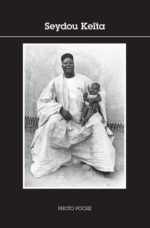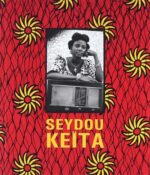
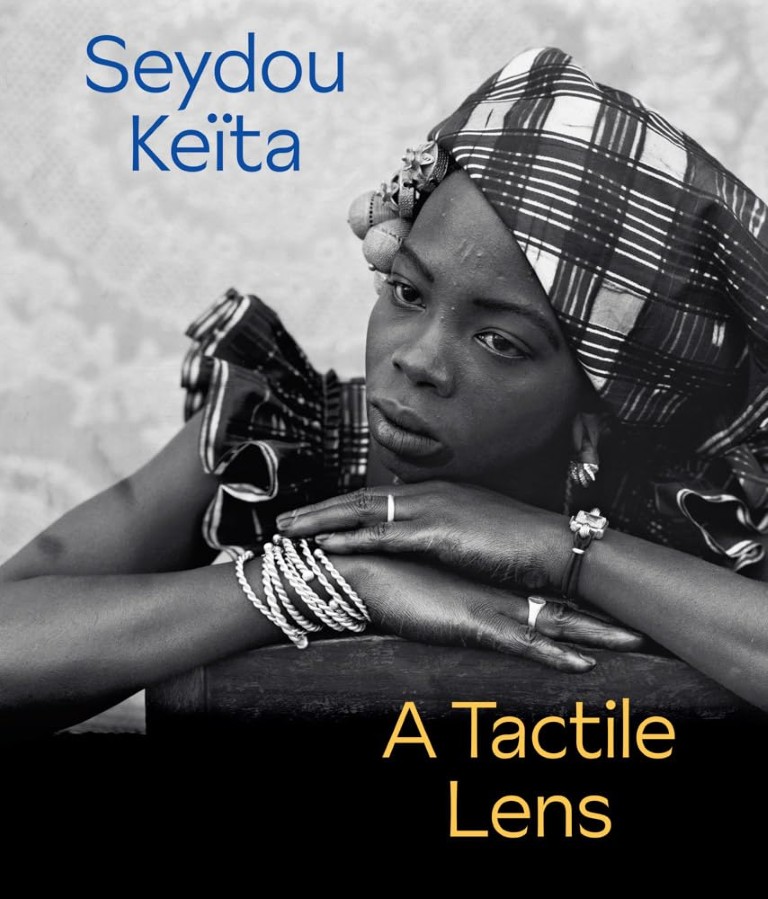
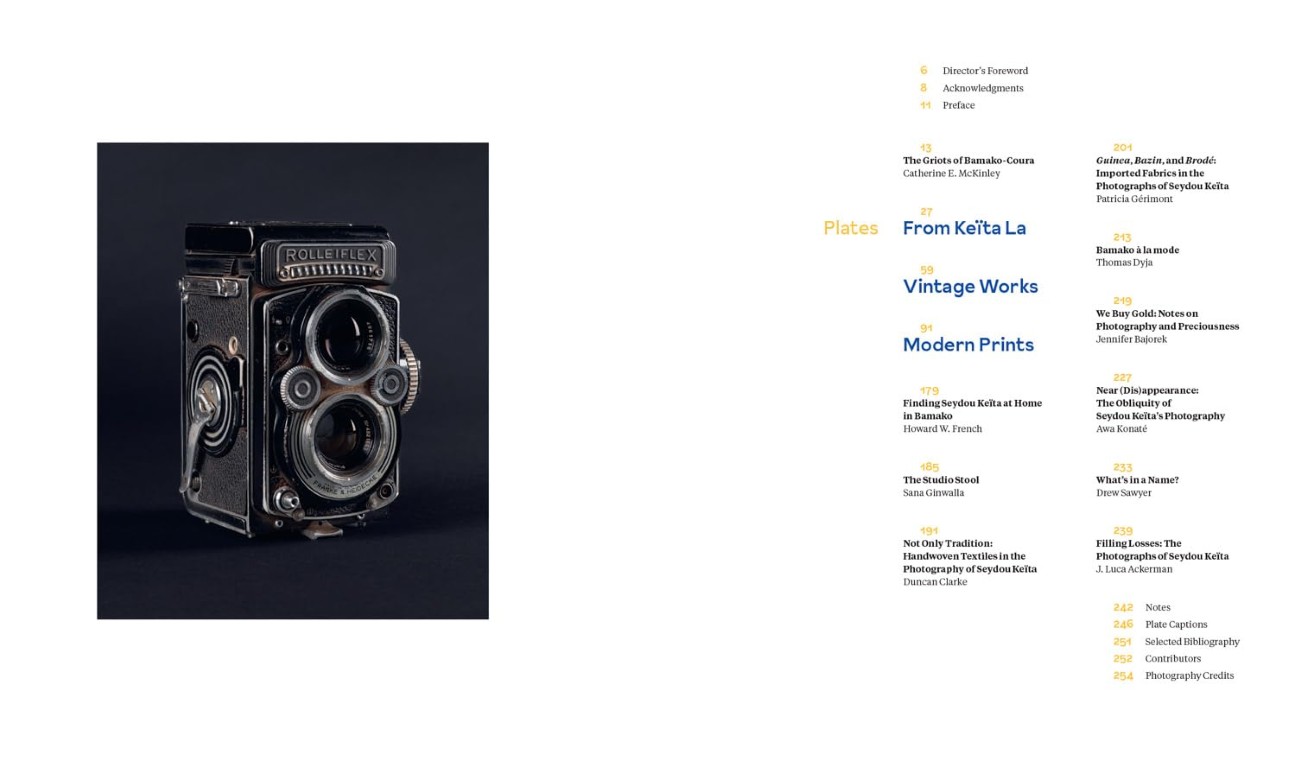
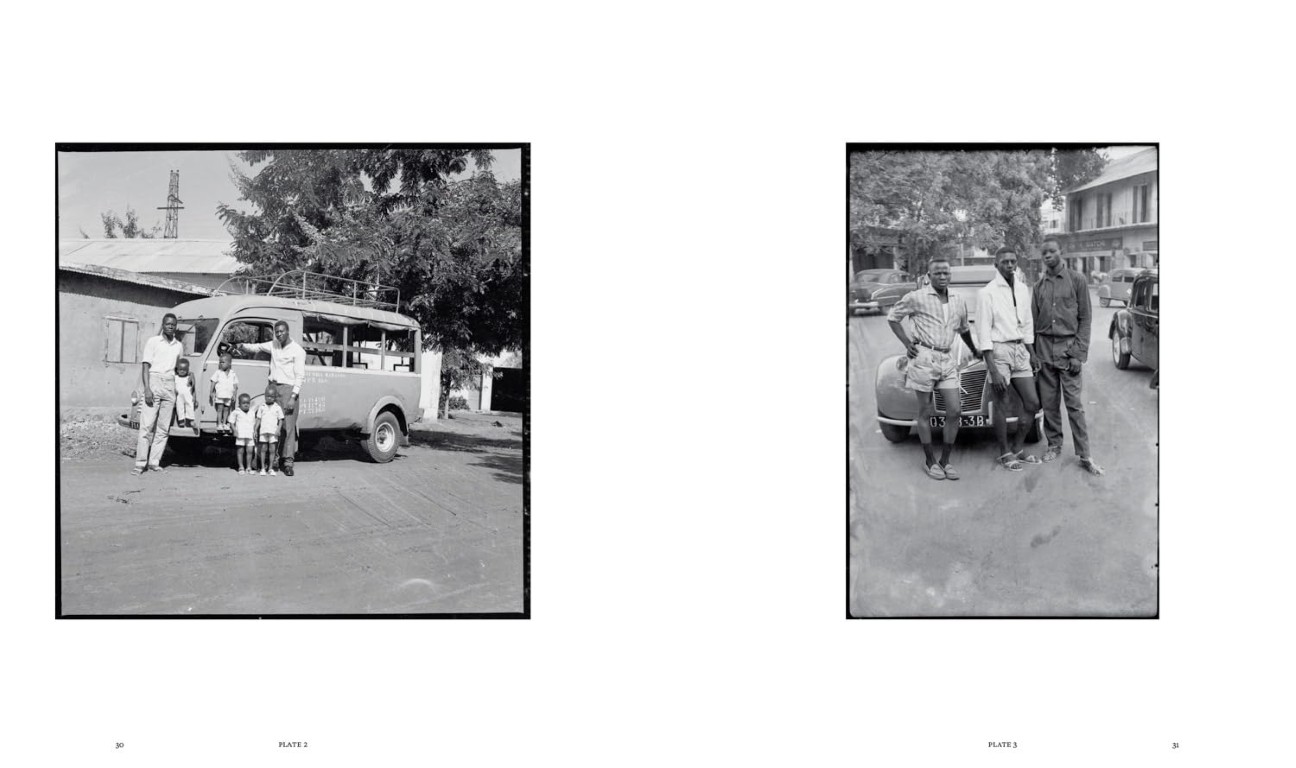
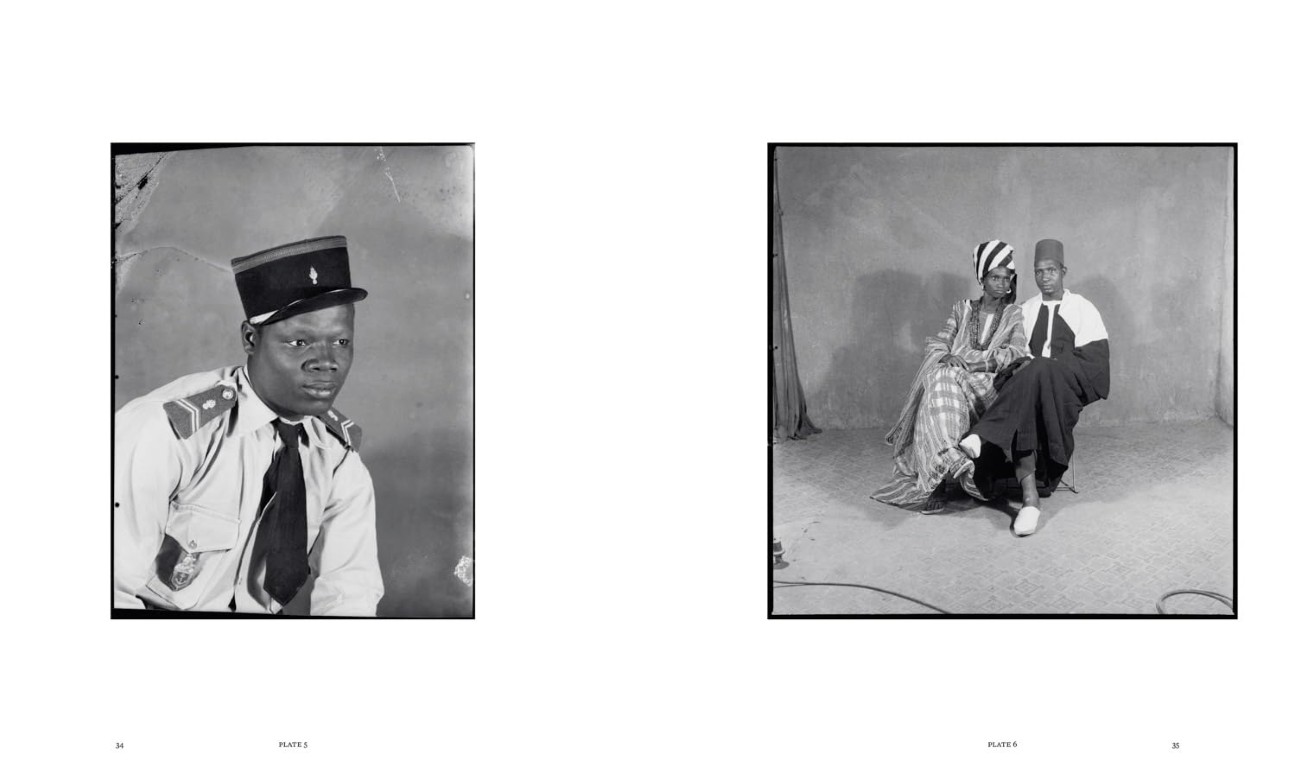
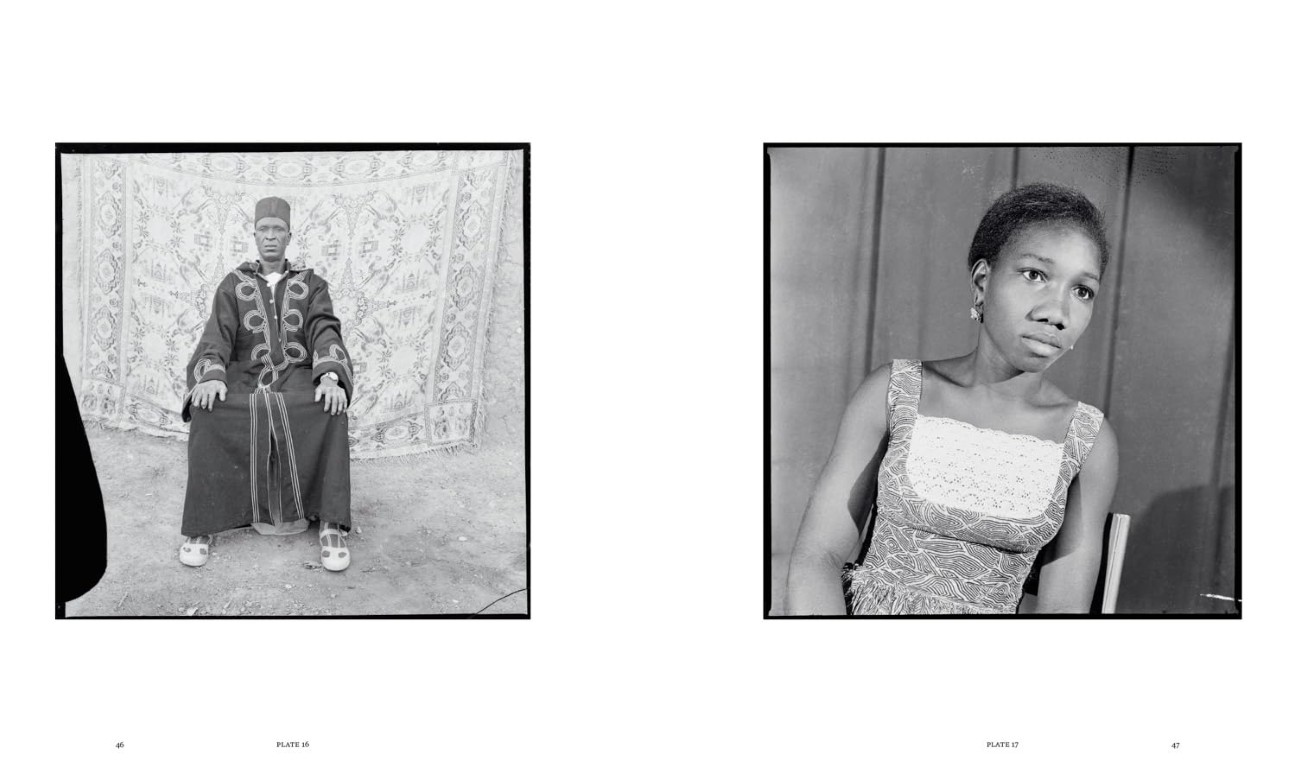
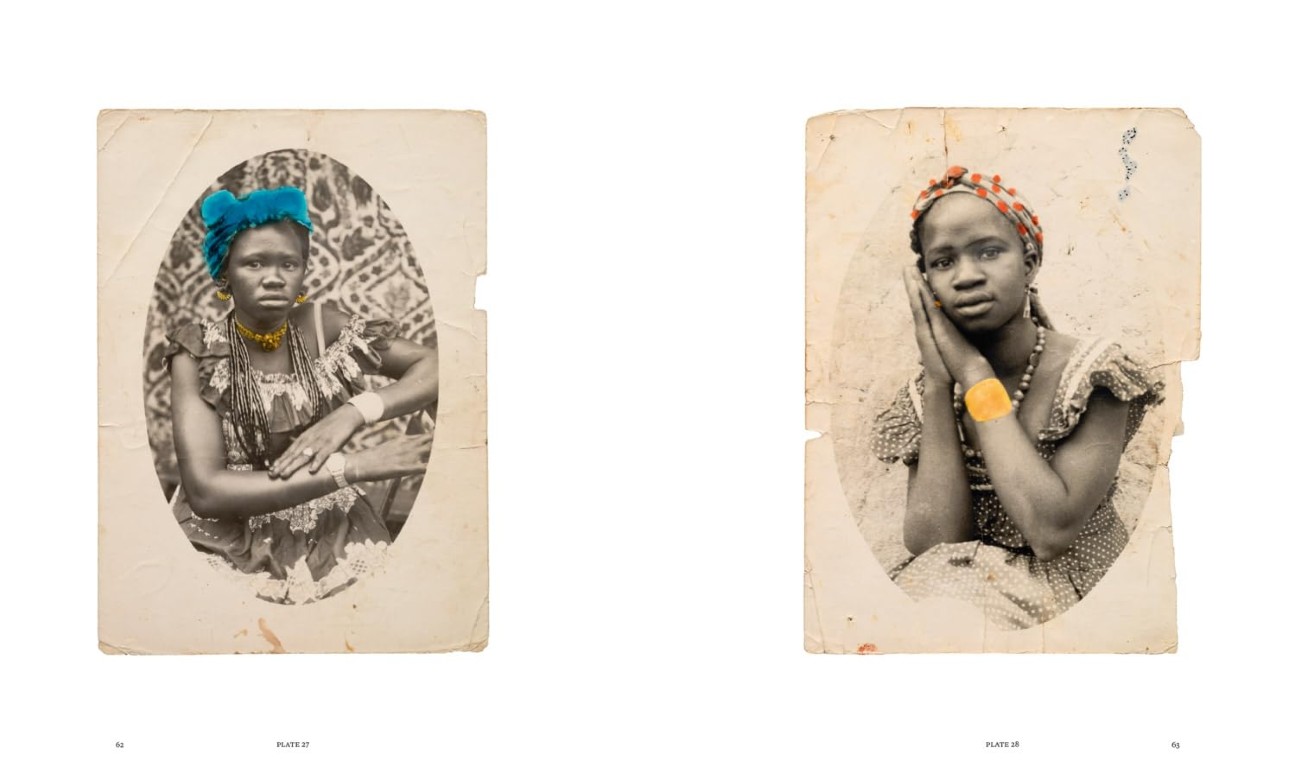
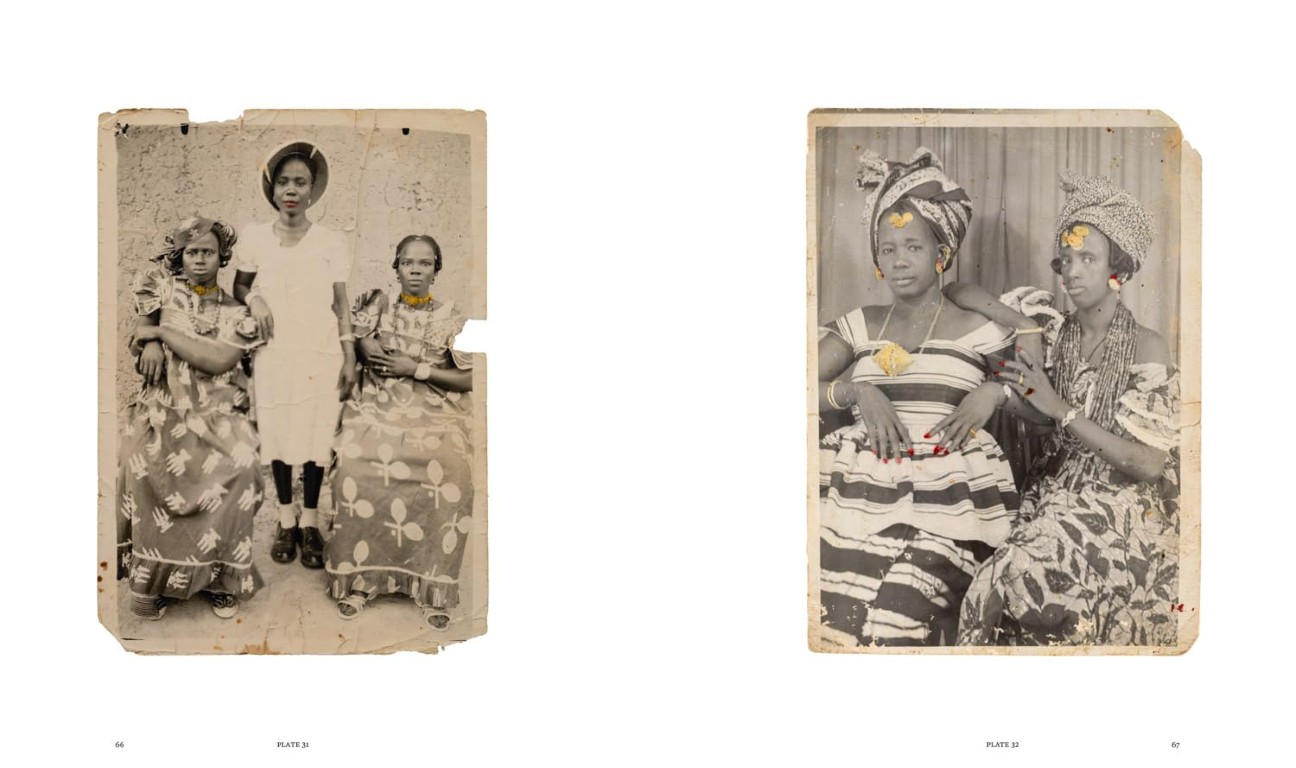
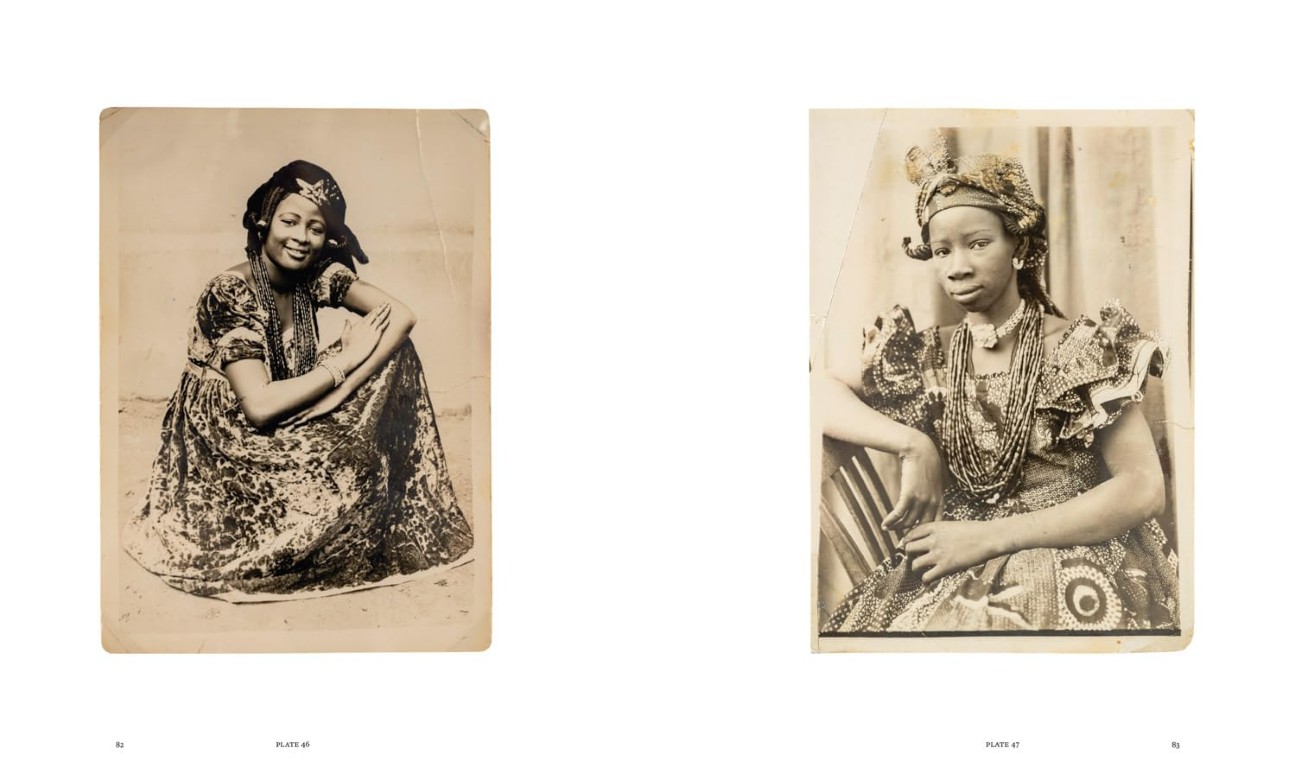
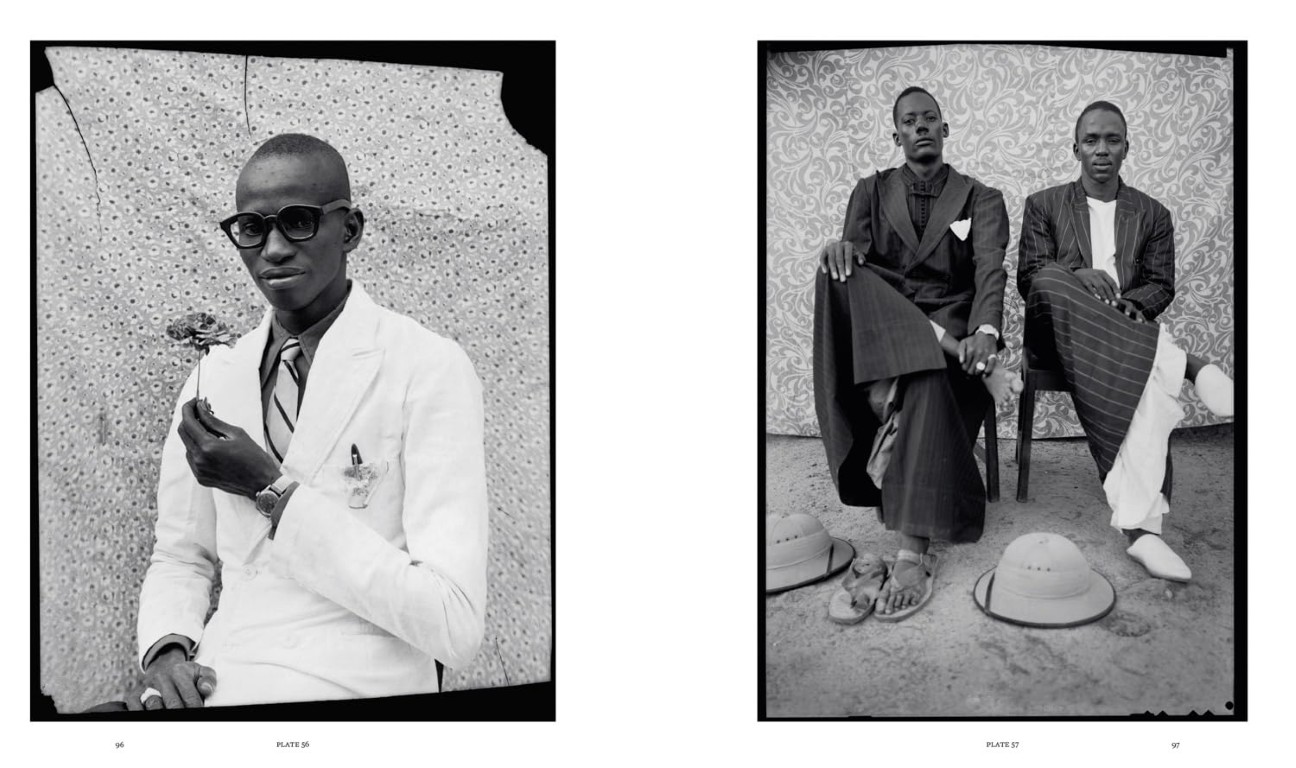
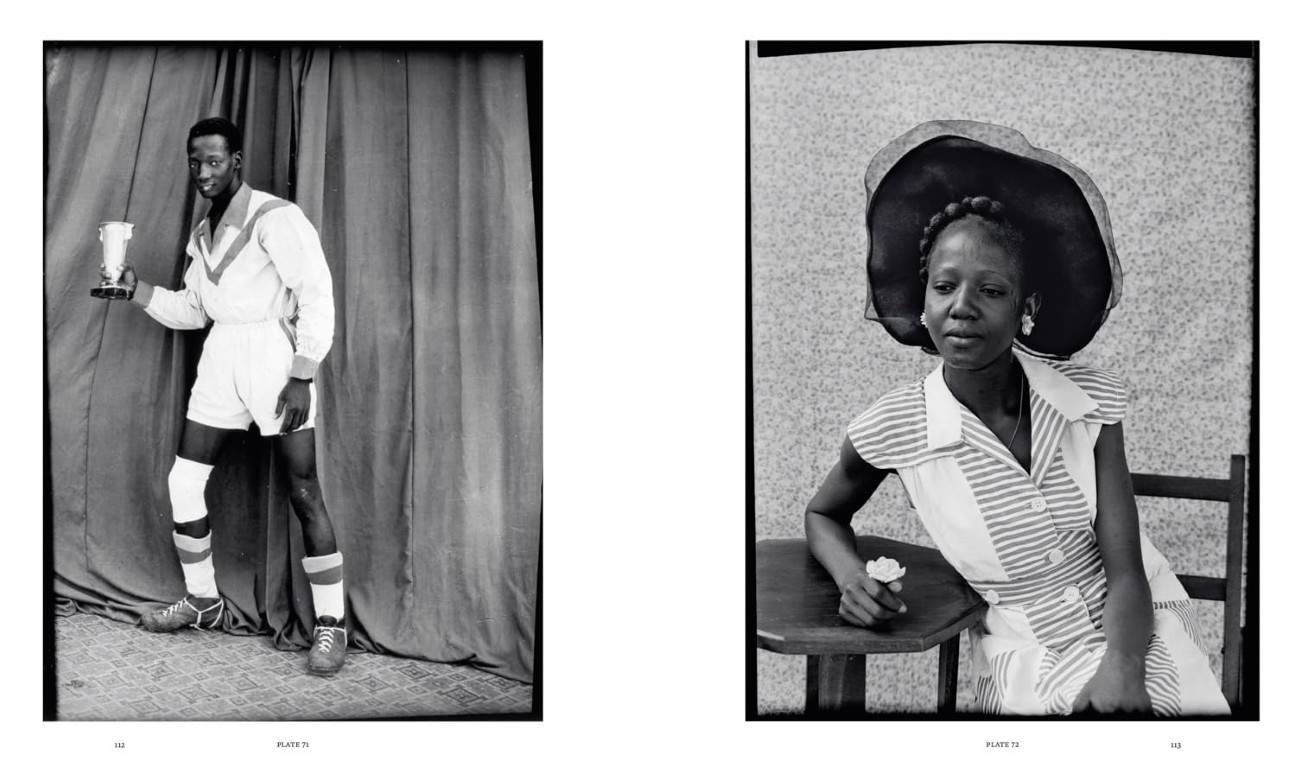
Les photographies de Seydou Keïta saisissent la culture malienne à une époque de profondes transformations. Portraitiste commercial, Keïta possédait une remarquable capacité à révéler les détails tactiles et les émotions de ses modèles, créant des portraits d’une intimité saisissante qui ont trouvé un écho auprès de publics bien au-delà des frontières géographiques et culturelles. En 1948, il ouvre l’un des premiers studios photographiques de Bamako. Situé à Bamako-Coura, le centre colonial de la ville, le studio attire une clientèle provenant de tout le pays et d’Afrique de l’Ouest. Keïta y propose des fonds aux motifs audacieux et une variété d’accessoires — voitures, Vespas, vêtements et objets européens — permettant aux personnes photographiées d’explorer de nouvelles manières de se mettre en scène devant l’objectif.
Cette publication novatrice, qui accompagne l’exposition du Brooklyn Museum, puise dans l’ensemble de la riche œuvre de Keïta — des portraits emblématiques et tirages vintage rarement vus aux négatifs présentés ici pour la première fois — afin d’explorer les réalités sociales et politiques de l’époque. Le catalogue a été nourri des contributions de la famille Keïta, notamment le prêt généreux de négatifs issus des archives familiales et de témoignages oraux. Richement illustré et accompagné de textes de chercheurs et d’auteurs de premier plan, cet ouvrage constitue le volume essentiel consacré à Seydou Keïta.
Né à Bamako, au Mali, Seydou Keïta (1921/23–2001) passe sa jeunesse à travailler comme menuisier, suivant les traces de son père. Il se tourne vers la photographie après avoir reçu en 1935 un appareil Kodak Brownie Flash offert par son oncle. Entre 1948 et 1963, Keïta photographie des milliers de Maliens et d’Africains de l’Ouest, devenant largement reconnu dans la région. Au début des années 1990, son travail est découvert par le public occidental, consacrant Keïta comme l’un des plus grands photographes de studio de l’Afrique du XXᵉ siècle — un pair d’August Sander, Irving Penn et Richard Avedon.
Coédité avec le Brooklyn Museum, sous la direction de Catherine E. McKinley, avec des textes de J. Luca Ackerman, Jennifer Bajorek, Duncan Clarke, Thomas Dyja, Howard W. French, Patricia Gérimont, Sana Ginwalla, Awa Konaté et Drew Sawyer, photos en n.b.
Seydou Keïta’s photographs capture Malian culture during an era of radical transformation. As a commercial portrait photographer, Keïta had a remarkable ability to draw out tactile details and emotions from his subjects, creating strikingly intimate portraits that have resonated with audiences across geographic and cultural borders. In 1948, Keïta opened one of the city’s first photography studios. Located in Bamako-Coura, the city’s colonial center, the studio attracted clientele from across the country and West Africa. Keïta offered bold, patterned backdrops and props―including cars, Vespas and European clothing and accessories―that allowed sitters to explore new ways of fashioning the self before the camera’s lens.
This groundbreaking publication, which accompanies an exhibition at the Brooklyn Museum, draws from across Keïta’s rich œuvre―spanning iconic portraits and rarely seen vintage prints to never-before-shown negatives―to explore the social and political realities of the period. The catalog was informed and enriched by contributions from the Keïta family, including their generous loan of negatives from the family archive and oral histories. Richly illustrated and supported with texts from leading scholars and writers, this book is the essential volume on Seydou Keïta.
Born in Bamako, Mali, Seydou Keïta (1921/23–2001) spent his youth working as a carpenter, following in the footsteps of his father. He shifted his focus to photography after receiving a Kodak Brownie Flash camera as a gift from his uncle in 1935. Between 1948 and 1963, Keïta photographed thousands of Malians and West Africans, becoming widely recognized across the region. In the early 1990s, his work reached Western viewers, cementing Keïta as one of the premier studio photographers of 20th-century Africa―a peer of August Sander, Irving Penn and Richard Avedon ; co-published with Brooklyn Museum, edited by Catherine E. McKinley, texts by J. Luca Ackerman, Jennifer Bajorek, Duncan Clarke, Thomas Dyja, Howard W. French, Patricia Gérimont, Sana Ginwalla, Awa Konaté and Drew Sawyer.