Gordon Parks Foundation
-

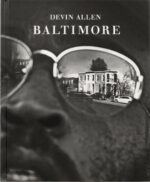
Devin Allen : Baltimore
45,00€Un livre de photos retraçant la dernière décennie de la communauté noire de Baltimore et leur lutte pour la justice raciale, à travers le prisme d’un Devin Allen local qui a pris de l’importance en 2015, lorsque sa photographie du soulèvement de Baltimore qui a suivi la mort de Freddie Gray aux mains de la police a été publiée sur la couverture du magazine Time.
A photobook chronicling the past decade of Baltimore’s Black community and their fight for racial justice, through the lens of a local Devin Allen rose to prominence in 2015, when his photograph of the Baltimore uprising that followed the death of Freddie Gray at the hands of police was published on the cover of Time magazine.
Ce livre, récompensé par le prix du livre Gordon Parks Foundation / Steidl 2023, comprend plus de 100 photographies de Devin Allen, couvrant 2015 à 2023, dont beaucoup n’ont jamais été publiées auparavant. Conçu comme un récit personnel sur ce que Devin Allen a appelé « la texture de nous », le livre englobe des portraits formels, des images de manifestations et des scènes de rue.
This book, awarded the 2023 Gordon Parks Foundation / Steidl Book Prize, includes more than 100 of David Allen’s photographs, spanning 2015–2023, many of them never published before. Conceived as a personal narrative about what Allen has called “the texture of us,” the book encompasses formal portraits, images of protests and street scenes.
-

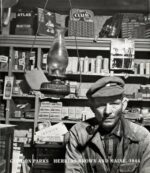
Gordon Parks : Herklas Brown and Maine, 1944
58,00€La chronique de Gordon Parks sur la petite ville du Maine anticipe ses images profondes des droits civiques et de l’inégalité. En janvier 1944, Gordon Parks (1912-2006) a photographié Herklas Brown – le propriétaire d’un magasin général et d’une station-service Esso à Somerville, dans le Maine.
Gordon Parks’ chronicle of small-town Maine anticipates his profound images of civil rights and inequality In January 1944, Gordon Parks (1912-2006) photographed Herklas Brown-the owner of a general store and Esso gas station in Somerville, Maine.
-

Gordon Parks : Pastor E. F. Ledbetter and the Metropolitan Missionary Baptist Church, 1953
58,00€Le premier article que Gordon Parks a écrit et photographié est reconstitué à travers des images inédites, des fiches de contact, du matériel éphémère et le manuscrit original de Parks.
The first feature article that Gordon Parks both wrote and photographed is reassembled through previously unseen images, contact sheets, ephemeral material and Parks’ original manuscript.
-

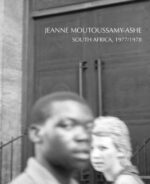
Jeanne Moutoussamy-Ashe : South Africa, 1977/1978
Cette publication, lauréate du prix du livre Gordon Parks Foundation/Steidl 2024, présente plus de 100 photographies de Moutoussamy-Ashe, dont beaucoup n’ont jamais été publiées auparavant.
This publication, winner of the 2024 Gordon Parks Foundation/Steidl Book Prize, features more than 100 of Moutoussamy-Ashe’s photographs, many never published before.
Superbes photographies documentant les gens, les lieux et les mouvements activistes de l’ère de l’apartheid en Afrique du Sud La compréhension de la race et de la classe par la photographe américaine Jeanne Moutoussamy-Ashe a été façonnée par les pratiques discriminatoires systémiques de Chicago; comme elle le reflétait plus tard, « à sa manière, une forme d’apartheid. » Après avoir rencontré les photographies d’Ernest Cole et sa formation auprès de mentors tels que Gordon Parks et Garry Winogrand au début des années 1970, Moutoussamy-Ashe (née en 1951) se rend en Afrique du Sud au plus fort de l’apartheid, armée de son appareil photo. En mars 1977, elle y accompagne son mari Arthur Ashe dans le cadre d’une équipe de tournage d’un documentaire télévisé sur les sports et l’apartheid. Revenant seule l’année suivante, elle a visité le Cap, Durban, Johannesburg et KwaZulu-Natal, ainsi que les cantons d’Alexandra, de Kliptown, de Lenasia et de Soweto, en découvrant le pays et ses habitants à travers son objectif, avoir un accès privilégié à divers événements et documenter des rencontres avec des personnalités influentes. En noir et blanc et en couleurs vives, les images de Moutoussamy-Ashe offrent un point de vue distinct d’un photographe afro-américain sur une période turbulente dans l’histoire sud-africaine.
Superb photographs documenting the people, places and activist movements in apartheid-era South Africa American photographer Jeanne Moutoussamy-Ashe’s understanding of race and class was shaped by Chicago’s systemic discriminatory practices; as she later reflected, the city had, « in its own way, a form of apartheid. » After encountering Ernest Cole’s photographs and training with mentors such as Gordon Parks and Garry Winogrand in the early 1970s, Moutoussamy-Ashe (born 1951) traveled to South Africa at the height of apartheid, armed with her camera. In March 1977 she accompanied her husband Arthur Ashe there, as part of a team filming a TV documentary on sports and apartheid. Returning alone the next year, she visited Cape Town, Durban, Johannesburg and KwaZulu-Natal, and the townships of Alexandra, Kliptown, Lenasia and Soweto, getting to know the country and its people through her lens, gaining special access to various events and documenting encounters with influential figures. In stark black-and-white and vivid color, Moutoussamy-Ashe’s images offer a distinct perspective from an African American photographer on a turbulent period in South African history.
-

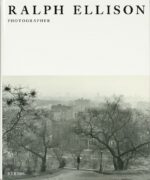
Ralph Ellison : Photographer
Ralph Ellison (1913-1994) est une figure de proue de la littérature américaine, salué pour son roman phare Invisible Man (1952), une représentation révolutionnaire de l’expérience américaine et de la vie quotidienne des Noirs. Moins connu, cependant, est son engagement tout au long de sa vie avec la photographie.
Ralph Ellison (1913–94) is a foremost figure in American literature, hailed for his seminal novel Invisible Man (1952), a breakthrough representation of the American experience and Black everyday life. Lesser known, however, is his lifelong engagement with photography.
Photographer est le premier livre consacré au vaste travail de Ralph Ellison avec ce medium, qui s’étend des années 1930 aux années 1990.
Photographer is the first book dedicated to Ralph Ellison’s extensive work in the medium, which spans from the 1930s to the ’90s.
-

Jamel Shabazz : Albums
Récipiendaire du Gordon Parks Foundation / Steidl Book Prize 2022.
Recipient of The Gordon Parks Foundation / Steidl Book Prize 2022.
L’influent photographe new-yorkais Jamel Shabazz réalise des portraits des communautés de la ville depuis plus de 40 ans.
The influential New York photographer Jamel Shabazz has created portraits of the city’s communities for over 40 years.