

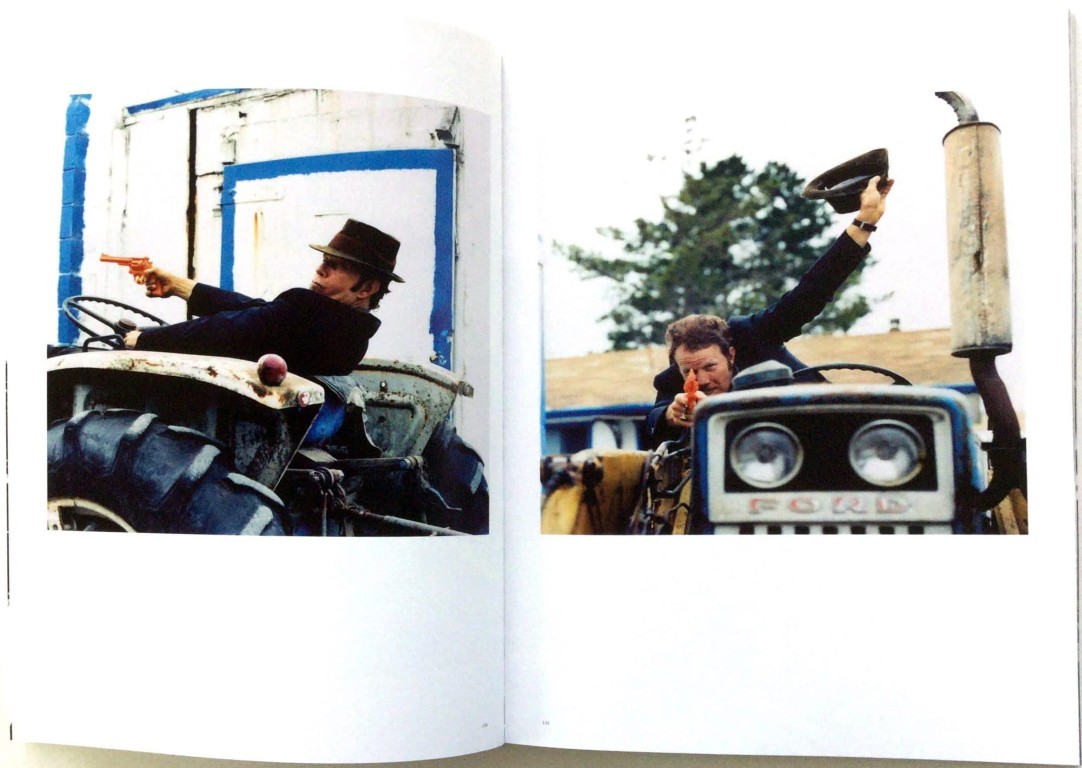


WAITS/CORBIJN ‘77-’11 est la chronique d’une collaboration artistique qui remonte à plus de 35 ans, à ces premiers black-et des photographies blanches de Tom Waits prises par un jeune Anton Corbijn en Hollande en 1977. Corbijn serait ensuite acclamé pour ses portraits énigmatiques emblématiques de musiciens et d’autres artistes—de U2 et Miles Davis à Robert De Niro et Clint Eastwood à Damien Hirst et Gerhard Richter — devenant également un designer, un pionnier dans le clip musical et plus récemment, un réalisateur de longs métrages primé. En 1977, Tom Waits était déjà connu dans le monde entier pour une série d’albums époustouflants et intemporels, remplis de chansons d’un film noir-tinged Los Angeles qui devait autant à des écrivains comme John Fante et Jack Kerouac qu’à du jazz, du blues et une allée tin-pan qui avait trempé les pores de Waits depuis l’enfance. Ahead of Waits a établi un partenariat avec Kathleen Brennan—qui l’a mené à des enregistrements de référence tels que Rain Dogs et Mule Variations — son travail cinématographique avec Francis Ford Coppola et Jim Jarmusch, ainsi que ses projets scéniques avec le légendaire réalisateur Robert Wilson.
Dans ces premières photographies, se trouvent ensuite les graines de ces deux carrières entrelacées, qui se nourrissent l’une de l’autre. Tom Waits, une personnalité vibrante, a aidé Corbijn à définir son style narratif et cinématographique de photographie : des images qui semblaient comme si vous arriviez au milieu d’un drame en cours. Corbijn a complimenté le côté théâtral de Waits d’une manière qui se synchronisait magnifiquement avec la musique expérimentale qu’il faisait avec Brennan. « Anton ramasse une petite boîte noire, la pointe vers vous et toutes les feuilles tombent des arbres. Les ombres sont maintenant longues et effrayantes, la maison semble complètement abandonnée et je ressemble à un beau… croque-mort. J’adore travailler avec Anton, c’est quelqu’un avec un vrai point de vue. Crois-moi, je n’irai pas sauter d’un rocher en portant seulement une cape de Dracula pour n’importe qui,” dit Tom Waits ; introduction de Jim Jarmusch, texte de Robert Christgau, photos en n.b. et quelques unes en couleurs.
WAITS/CORBIJN ‘77-’11 is the chronicle of an artistic collaboration that reaches back more than 35 years, to those first black-and-white photographs of Tom Waits taken by a young Anton Corbijn in Holland in 1977. Corbijn would go on to acclaim for his iconic enigmatic portraits of musicians and other artists—from U2 and Miles Davis to Robert De Niro and Clint Eastwood to Damien Hirst and Gerhard Richter—also becoming a designer, a pioneer in music video and more recently, an award-winning director of feature films. By 1977, Tom Waits was already known world-wide for a series of stunning, timeless albums, filled with songs of a noir-tinged Los Angeles that owed as much to writers like John Fante and Jack Kerouac as it did to jazz, blues and tin-pan alley that had soaked into Waits’ pores from childhood. Ahead of Waits lay his partnership with Kathleen Brennan—leading to such touchstone recordings as Rain Dogs and Mule Variations—his film work with the likes of Francis Ford Coppola and Jim Jarmusch, and his stage projects with legendary director Robert Wilson.
In those first photographs, then, are the seeds of these two intertwined careers, feeding off each other. Waits’ vibrant persona helped Corbijn define his narrative, cinematic style of still photography: images that felt as if you were coming in on the middle of some unfolding drama. Corbijn complimented Waits’ theatrical side in a way that synced beautifully with the experimental music he was making with Brennan. “Anton picks up a small black box, points it at you and all the leaves fall from the trees. The shadows now are long and scary, the house looks completely abandoned and I look like a handsome… undertaker. I love working with Anton, he’s someone with a real point of view. Believe me, I won’t go jumping off rocks wearing only a Dracula cape for just anyone,” Waits says.