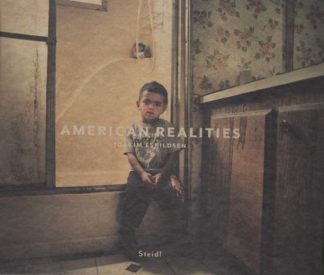
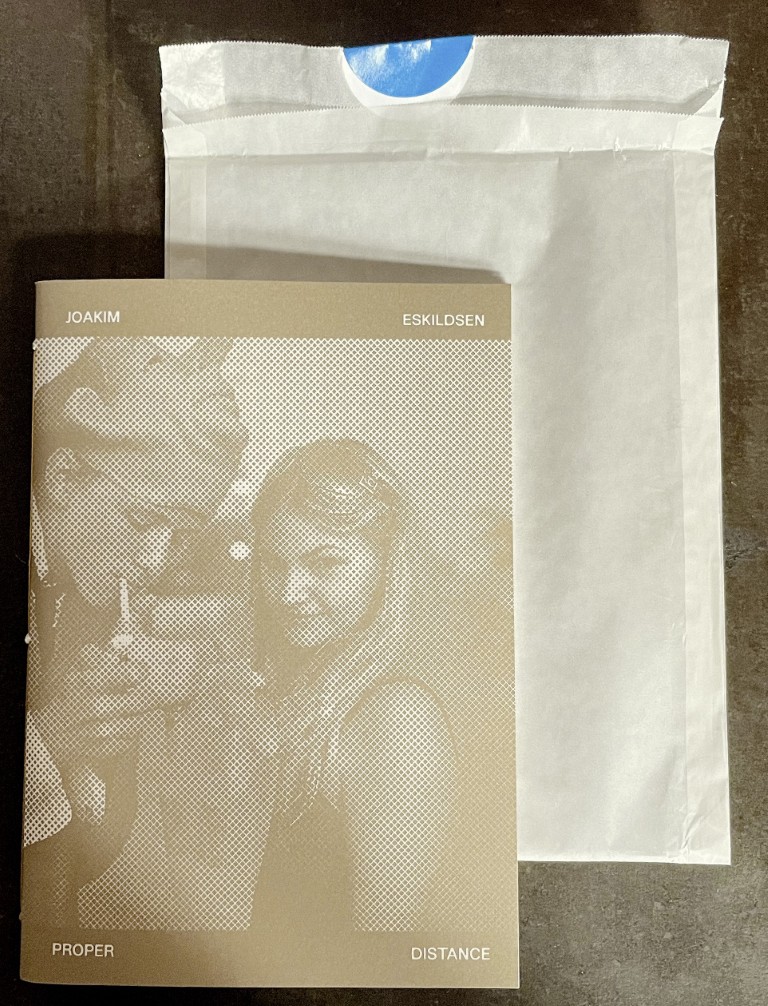
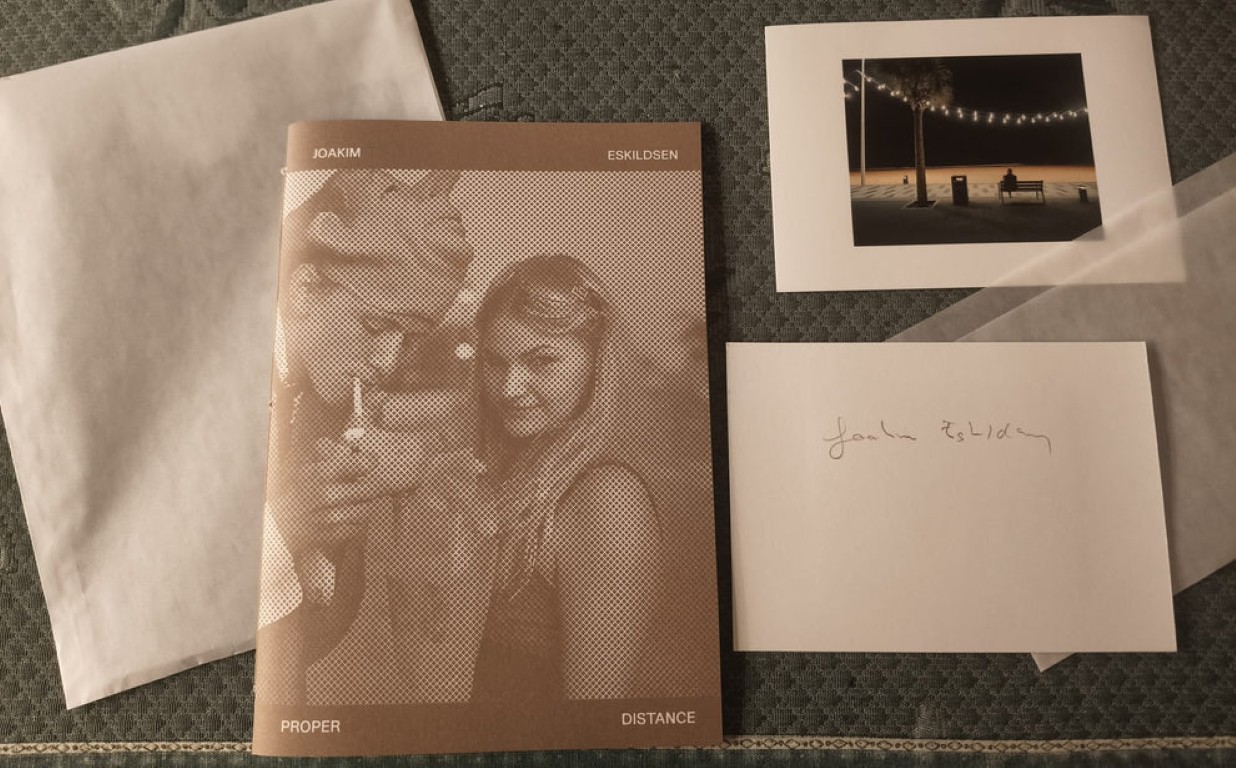
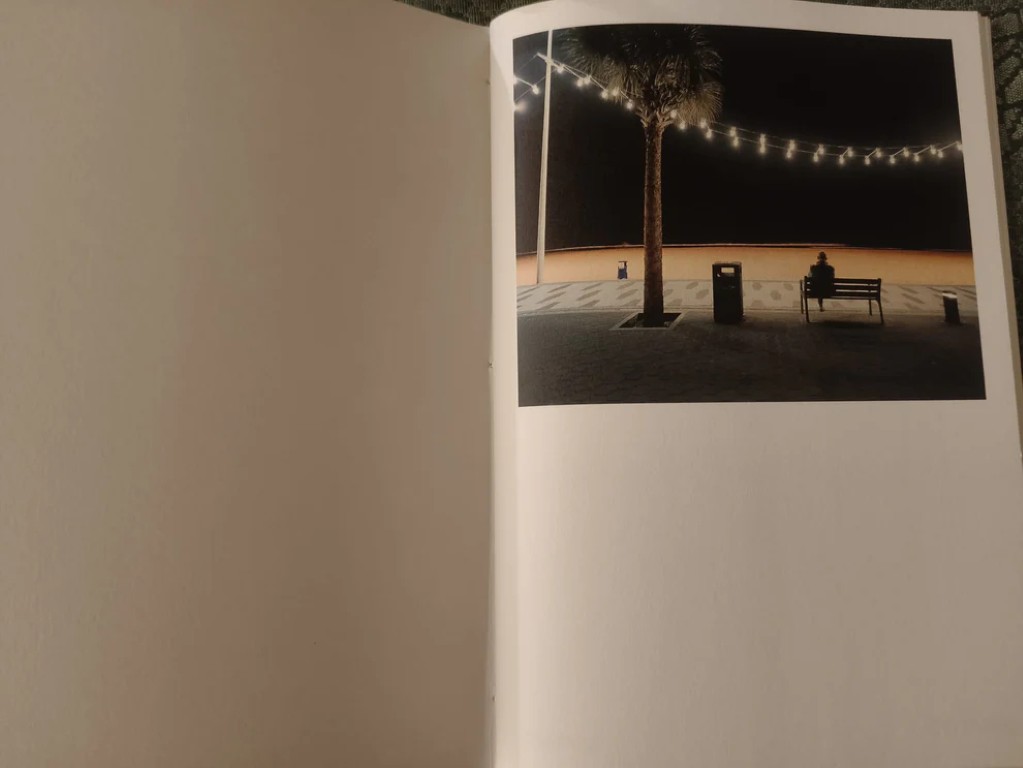
Né à Copenhague, l’artiste a choisi de s’installer à Berlin ; il capture des moments de pause, de stase, avec l’humanité apparaissant dans son regard comme une incarnation modeste enfermée dans un décor inflexible.
Nous passons, laissant derrière nous quelques traces de notre traversée existentielle, nous serons bientôt des fantômes ; d’ailleurs, nous le sommes peut-être déjà.
Joakim Eskildsen observe le monde et le ballet des vivants d’un endroit lointain, avec une solitude marquée par une délicate mélancolie.
C’est, par une connaissance brillante de la distance propre, un moyen de ne pas perturber la réalité et de laisser chaque instant respirer, avec la conscience perpétuelle que la fête, ou plus simplement le pouls de la vie, peut cesser à tout moment.
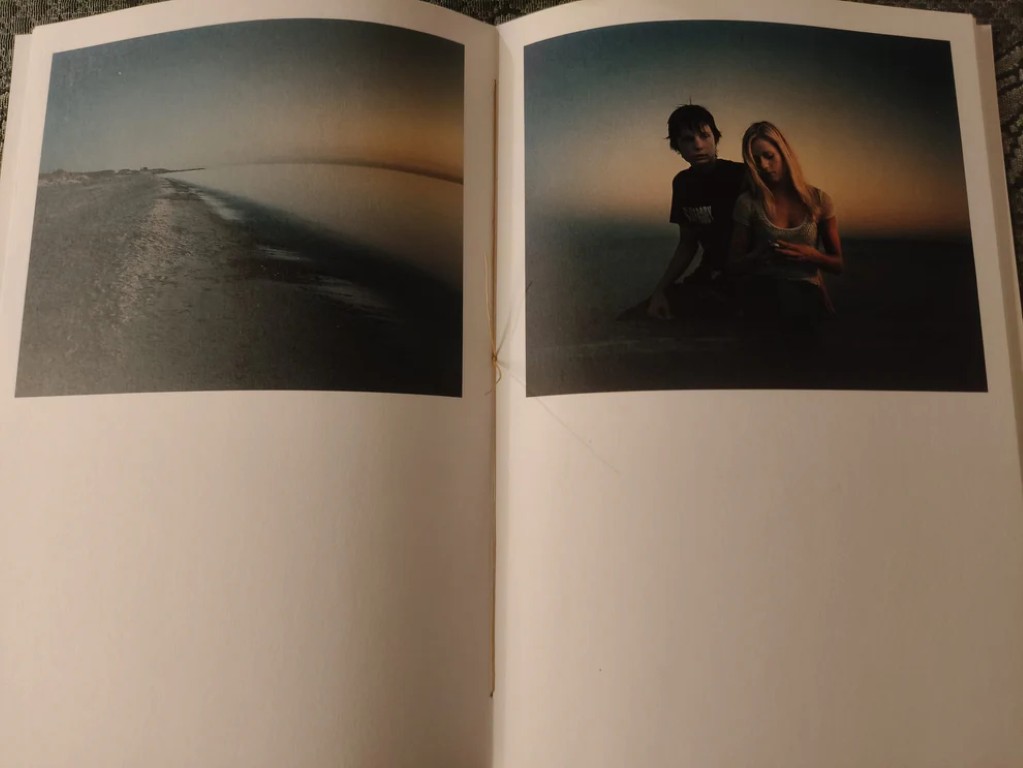
Ses photographies se présentent comme des vagues de rêve, la mer qu’il aime contempler comme une allégorie du temps qui passe, cyclique.
Par son attention à la nature dorée de la lumière, qui touche les personnages, les paysages ou les objets de son choix, l’auteur danois révèle une dimension de transfiguration en toutes choses.
Nous sommes attirés à penser à Christophe Bourguedieu, ainsi qu’à Todd Hido, par la substance cinématographique des scènes transmises.
Sommes-nous les acteurs de fond dans nos propres vies ?
Nous habitons des palais précaires, nous attendons que les événements se produisent, une catastrophe, une naissance, un acte d’amour.
En attendant que les images prennent vie, le spectateur assiste à la préparation de tous les éléments appartenant à un film dont l’intrigue est déroutante.
Tous construiront leurs propres séquences, leurs propres associations, leurs propres chemins d’intensité, cependant, profondément enfouis à l’intérieur, le régime scopique de Joakim Eskildsen est celui de la métaphysique, de la mer toujours recommencée, avec la conviction qu’il existe un ordre transcendantal formel dans lequel s’inscrit le destin des derniers humains. -Fabien Ribery
Born in Copenhagen, the artist chose to move to Berlin; he captures moments of pause, of stasis, with humankind appearing in his gaze as a modest incarnation enclosed in an unyielding decor.
We pass, leaving behind a few traces of our existential crossing, we will soon be phantoms; besides, we may already be.
Joakim Eskildsen observes the world and the ballet of the living from a distant place, with a solitude marked by a delicate melancholy.
It is, by a brilliant knowledge of proper distance, a way of not disrupting reality and to let every moment breathe, with the perpetual conscience that the party, or more simply the pulse of life, may cease at any point.
His photographs display themselves as dream waves, the sea he enjoys contemplating as an allegory for the passing, cyclical, of time.
Through his attention to the golden nature of light, as it touches the characters, landscapes, or objects of his choosing, the Danish author reveals a dimension of transfiguration in all things.
We are drawn to think of Christophe Bourguedieu, along with Todd Hido, by the cinematographic substance of the conveyed scenes.
Are we the background actors in our own lives ?
We inhabit precarious palaces, we wait for events to transpire, a catastrophe, a birth, an act of love.
Waiting for the pictures to come alive, the onlooker witnesses the preparation of all the elements belonging to a film whose plot is perplexing.
All will construct their own sequences, their own associations, their own paths of intensity, however, buried deep inside, Joakim Eskildsen’s scopic regime is that of the metaphysical, of the sea always starting over, with the conviction that there exists a formal transcendental order in which the fate of the last humans inscribes itself. -Fabien Ribery