Le photographe américain Bill Burke, a documenté l’architecture et les bâtiments en Indochine lors d’un voyage à travers l’Asie en 1982 ; texte de Bernard Fall, lettre du Prince Sirik Matak, photos en n.b.
Marques d’étagères sur la tranche de queue.
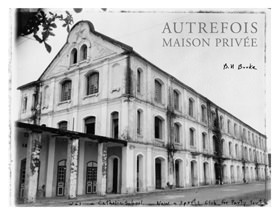
Bill Burke : Autrefois, maison privée
Le photographe américain Bill Burke, a documenté l’architecture et les bâtiments en Indochine lors d’un voyage à travers l’Asie en 1982 ; texte de Bernard Fall, lettre du Prince Sirik Matak, photos en n.b. Marques d’étagères sur la tranche de queue.Lire la suite
Rupture de stock
Être averti si le livre est à nouveau en stock
| Poids | 1950 g |
|---|---|
| Dimensions | 26 × 34 cm |
| EAN | 9781576871805 |
| Photographe | |
| Ville | |
| Auteur(s) | |
| Editeur | |
| Date d'édition | |
| ISBN | 9781576871805 |
| Langue(s) | anglais |
| Nombre de pages | 184 |
| Reliure | Relié |
Plus de livre de cet éditeur
-

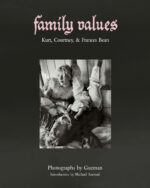
Guzman : Family Values ; Kurt, Courtney, & Frances Bean
33,00€Kurt Cobain et Courtney Love étaient notoirement connus pour leur représentation de l’opposé des « valeurs familiales ». Pour redéfinir leur notoriété, ils ont consenti à une rare séance photo pour le magazine Spin avec leur nouvelle-née, Frances Bean. Seules 5 photos ont été publiées à l’origine; le reste de la séance photo est ici pour la première fois.
Kurt Cobain and Courtney Love were notorious for representing the opposite of “Family Values.” To reframe their notoriety, they consented to a rare photoshoot for Spin magazine with their newborn, Frances Bean. Only 5 images were originally published; the rest of the photoshoot is seen here for the first time.
« Now the entire family was in bed together, and Hansen remembers how beautiful it was to see everyone in sync. “They just were loving Frances. It was really so apparent,” she said. “It was really about her. They were oblivious to us in a lot of cases, anytime they had the baby.”’ — Guzman Interview in CNN
-

Joseph Rodríguez : Flesh Life ; Sex in Mexico City
39,00€« Esprit, chair : à la fin la même quête, née d’une économie et d’une identité en ruine. Le signe le plus évident est la prolifération de la prostitution, une « sortie » de ce qui a toujours existé, mais furtivement. Le gouvernement a officiellement admis qu’il est impossible de freiner le commerce du sexe ; Mexico n’est pas occupée à démanteler les femmes et les hommes qui travaillent, mais à formuler des directives juridiques et sanitaires pour les travailleurs du sexe.—— Rubén Martinez
“Spirit, flesh: in the end the same quest, born of a crumbling economy and identity. The single most apparent sign is the proliferation in prostitution, an ‘outing’ of what has always existed, but furtively. The government has officially admitted that it is impossible to rein in the sex trade; Mexico City is not busy busting working women and men, but formulating legal and health guidelines for sex-workers.” —Rubén Martínez
-

Nat Ward : Ditch ; Montauk New York, 11954
Les photographies intemporelles de Nat Ward de la plage la plus célèbre de Montauk, Ditch Plains, racontent des histoires brutes de ce que nous sommes lorsque la plage est une scène : des êtres sensuels, des créatures sociales, des acteurs dramatiques, ceux qui veulent et souhaitent être désirés, ceux qui regardent et ceux qui souhaitent être regardés. Présentant quarante-neuf photographies panoramiques, Ditch : Montauk, New York, 11954 se complait dans un endroit où le plaisir est primordial, les divisions disparaissent et tout le monde est invité à entrer ensemble sur le sable et le regard, aussi impoli que cela puisse être. Le musicien légendaire Rufus Wainwright et son mari Jörn Weisbrodt ainsi que l’écrivain Wayne Koestenbaum contribuent par des textes sincères.
Nat Ward’s timeless photographs of Montauk’s most famous beach, Ditch Plains, tell the naked, unedited stories of who we are when the sand is a stage: sensual beings, social creatures, dramatic actors, those who want and wish to be wanted, those who look, and those who wish to be looked at. Featuring forty-nine panoramic photographs, Ditch: Montauk, New York, 11954 revels in a place where pleasure is paramount, divisions disappear, and everyone is welcome to crowd in together on the sand and stare, however impolite it may be. Legendary musician Rufus Wainwright and his husband Jörn Weisbrodt as well as writer Wayne Koestenbaum contribute heartfelt essays.
-

Jamel Shabazz : Drama & Flava
« Le Drama est l’attitude et le Flava est le style »-Jamel Shabazz.
“The Drama is the attitude and the Flava is the style,”-Jamel Shabazz.
Le célèbre photographe Jamel Shabazz, auteur du best-seller de livres photo hip-hop Back in the Days, est le photographe de référence pour les décors et la création de styles pour des films (Planet B-Boy), des séries épisodiques (Harlem, Luke Cage) et des pages mode pour des magazines et sites aux États-Unis, en Europe et en Asie. Pour la première fois, une ligne directe est tracée entre le travail révolutionnaire de Shabazz (le style et la mode de la fin des années 1970 jusqu’au début des années 1990) à travers son récent travail éditorial pour Vogue, The New York Times, DAZED, The New Yorker, W Magazine, Cultured Magazine, Brooklyn Magazine, The Art Newspaper, et bien d’autres. C’est Drama & Flava.
Acclaimed photographer Jamel Shabazz of best-selling hip-hop photo book Back in the Days is the go-to set and fashion styling photographer for films (Planet B-Boy), episodic series (Harlem, Luke Cage), and fashion spreads for magazines and sites from the U.S., Europe, and Asia. For the first time ever, a direct line is drawn between Shabazz’s groundbreaking early work (the styling and fashion of the late 1970s through the early 1990s) through his recent editorial work for Vogue, The New York Times, DAZED, The New Yorker, W Magazine, Cultured Magazine, Brooklyn Magazine, The Art Newspaper, and many more. This is Drama & Flava.
-

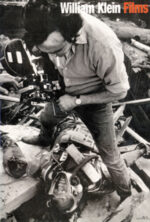
William Klein : Films
William Klein a bousculé le cinéma, comme il avait révolutionné la photographie en 1956 avec son livre sur New York. Ce dernier lui a d’ailleurs donné ses premières envies de mise en scène. Il aurait voulu tourner l’avant et l’après des photos.
William Klein shook up cinema, as he had revolutionized photography in 1956 with his book on New York. This one also gave him his first desire for directing. He would have liked to shoot before and after photos.