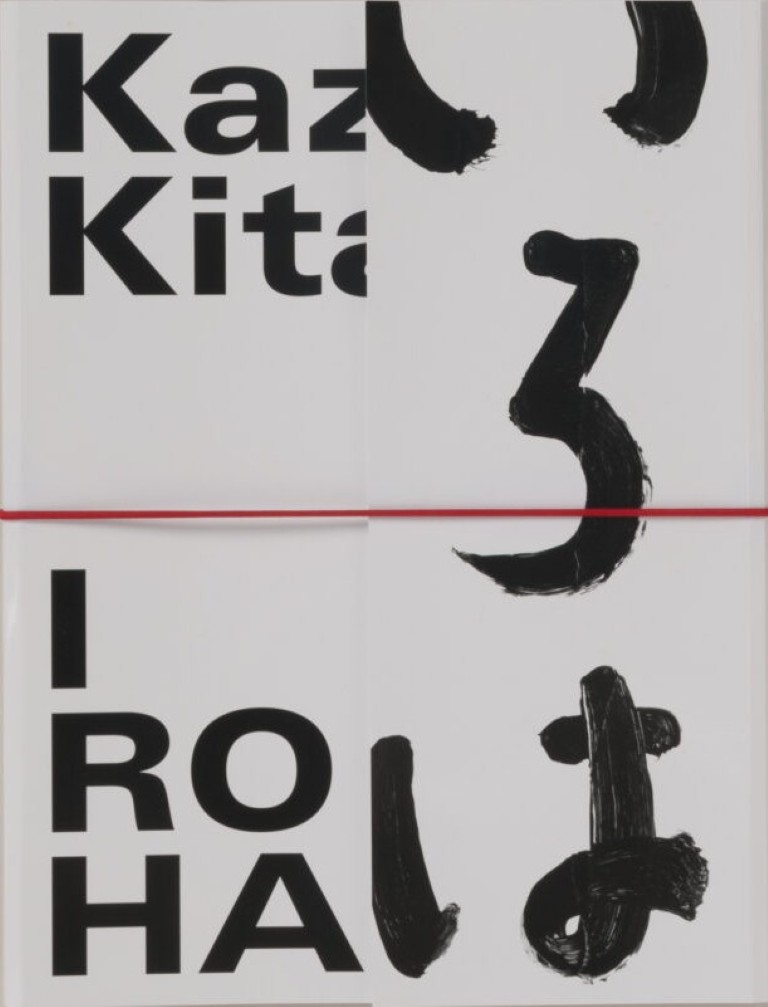
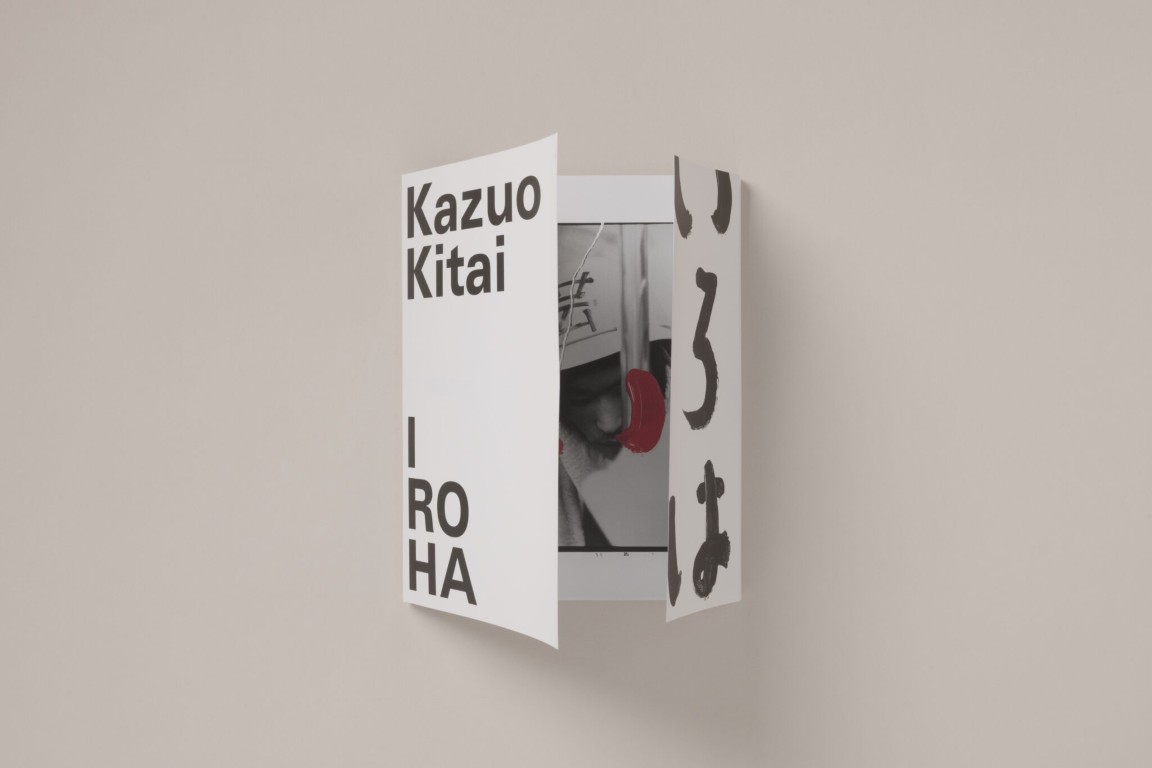
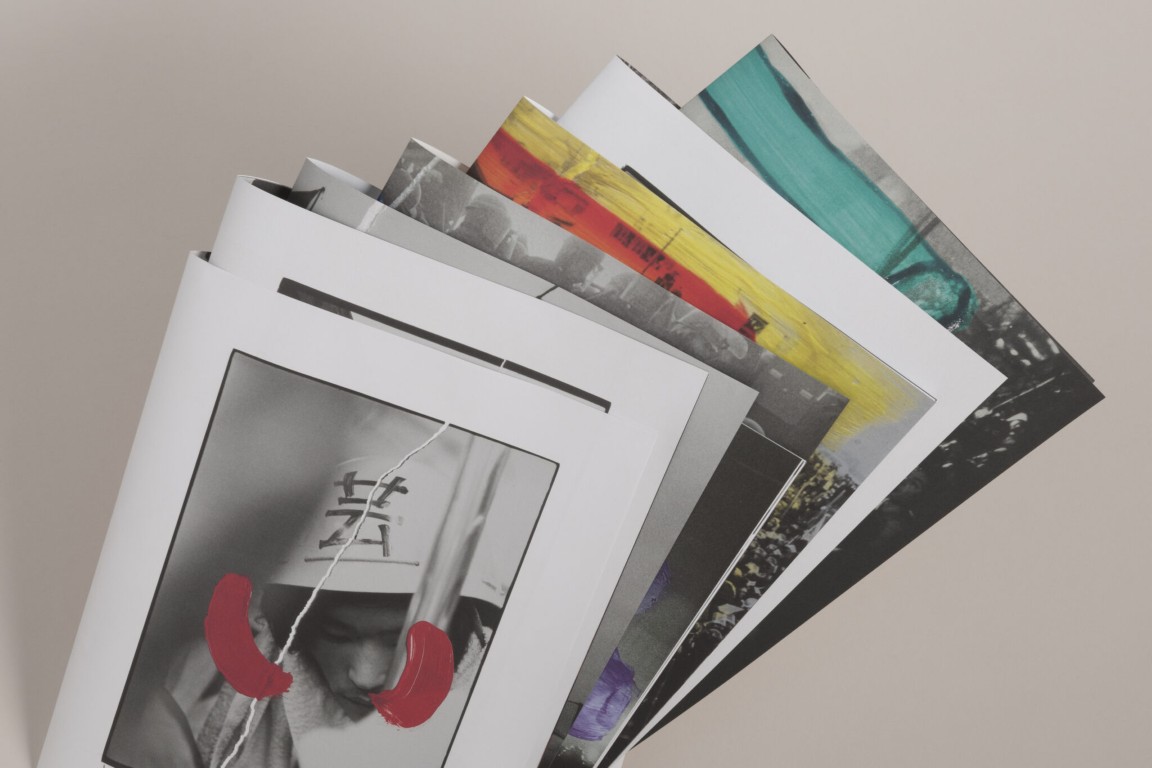
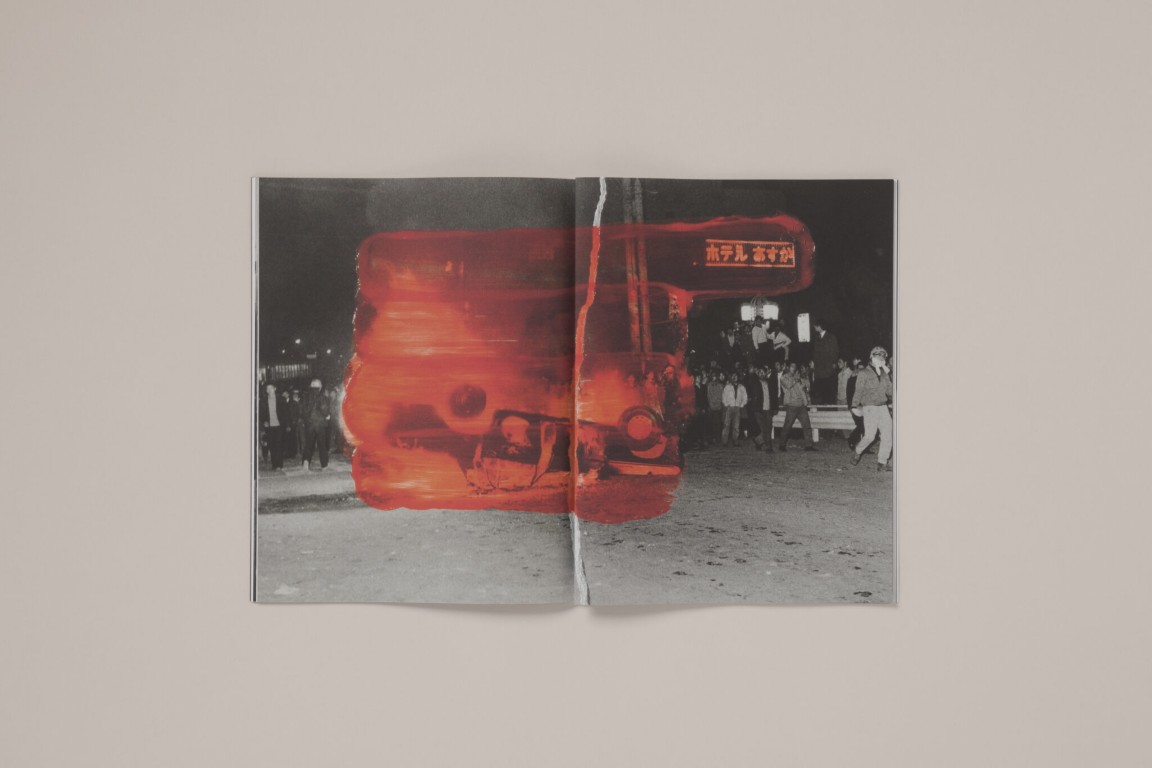
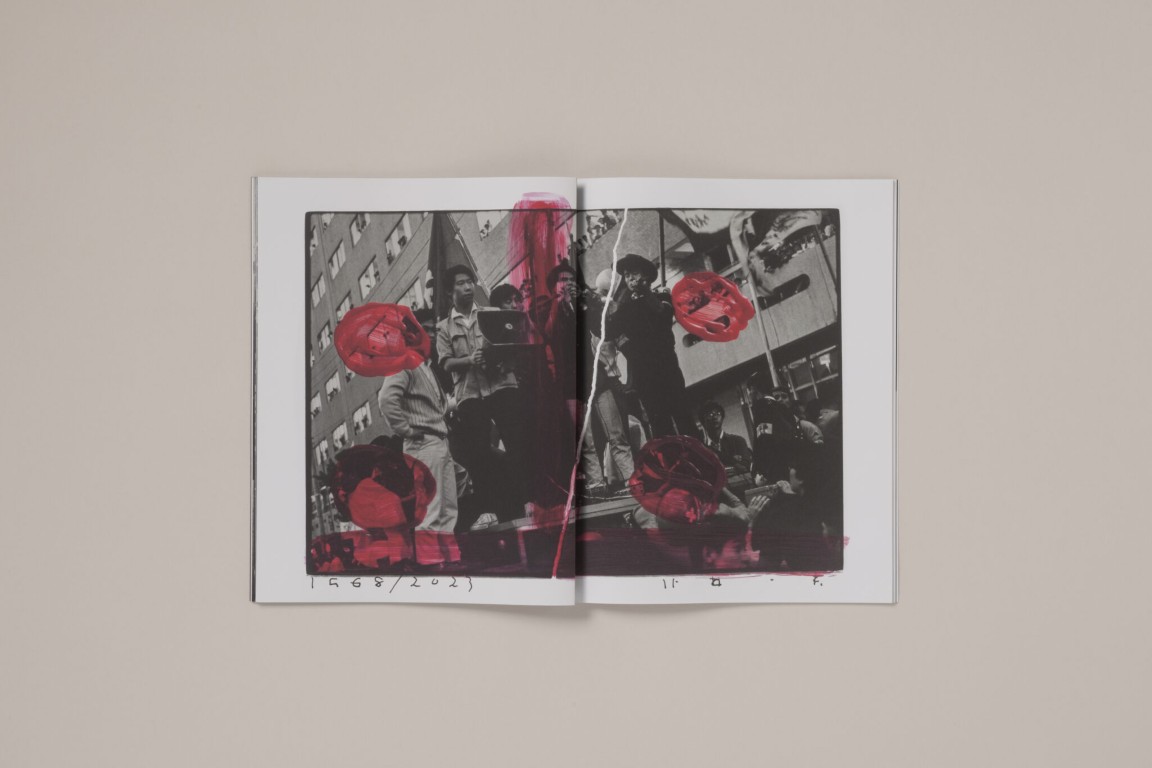
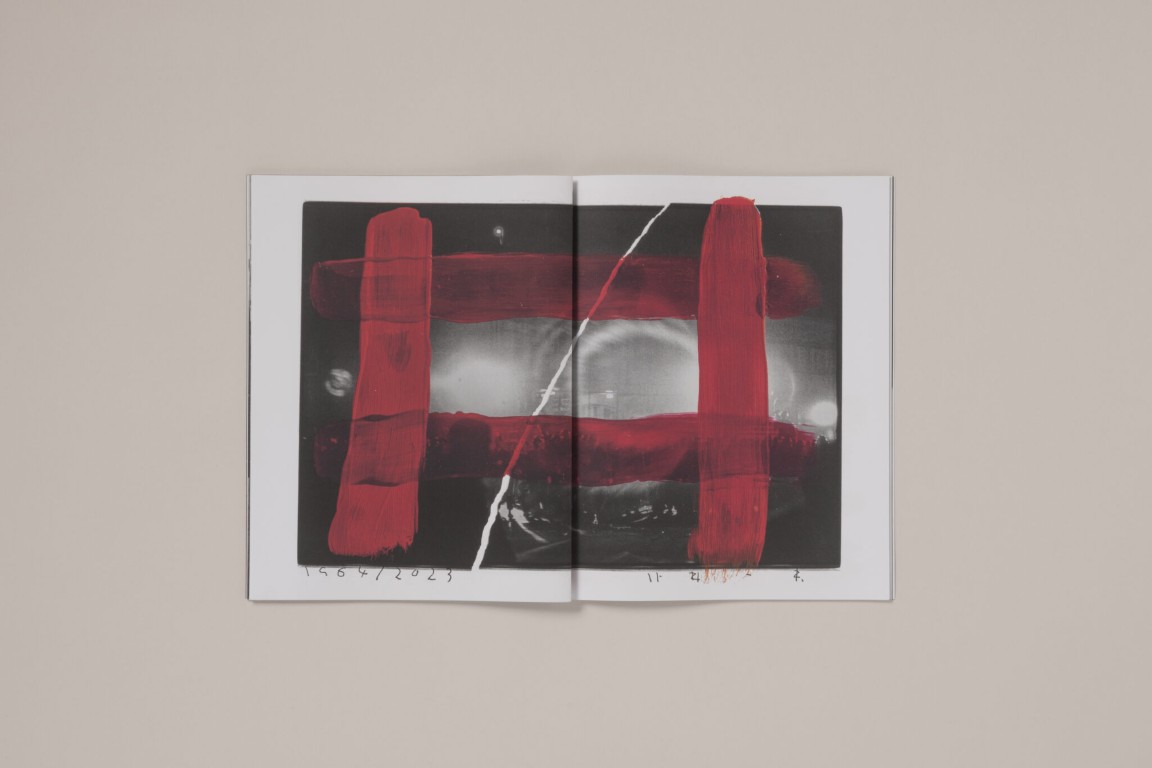
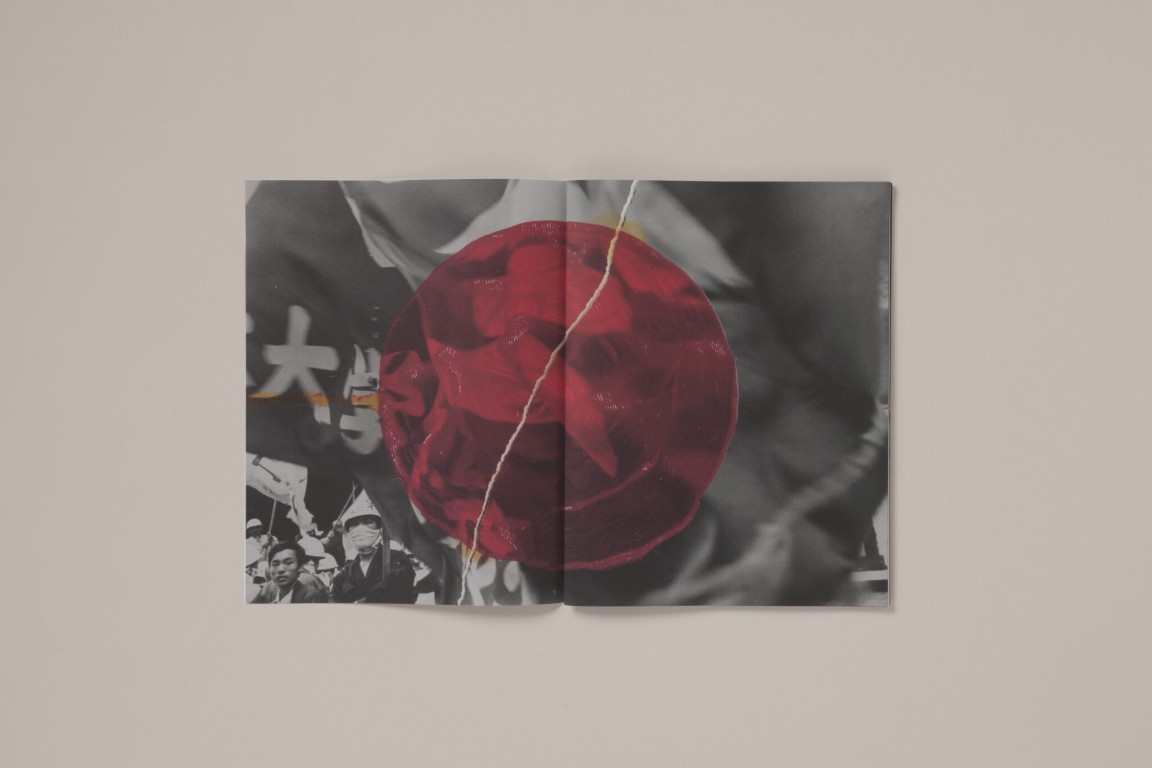
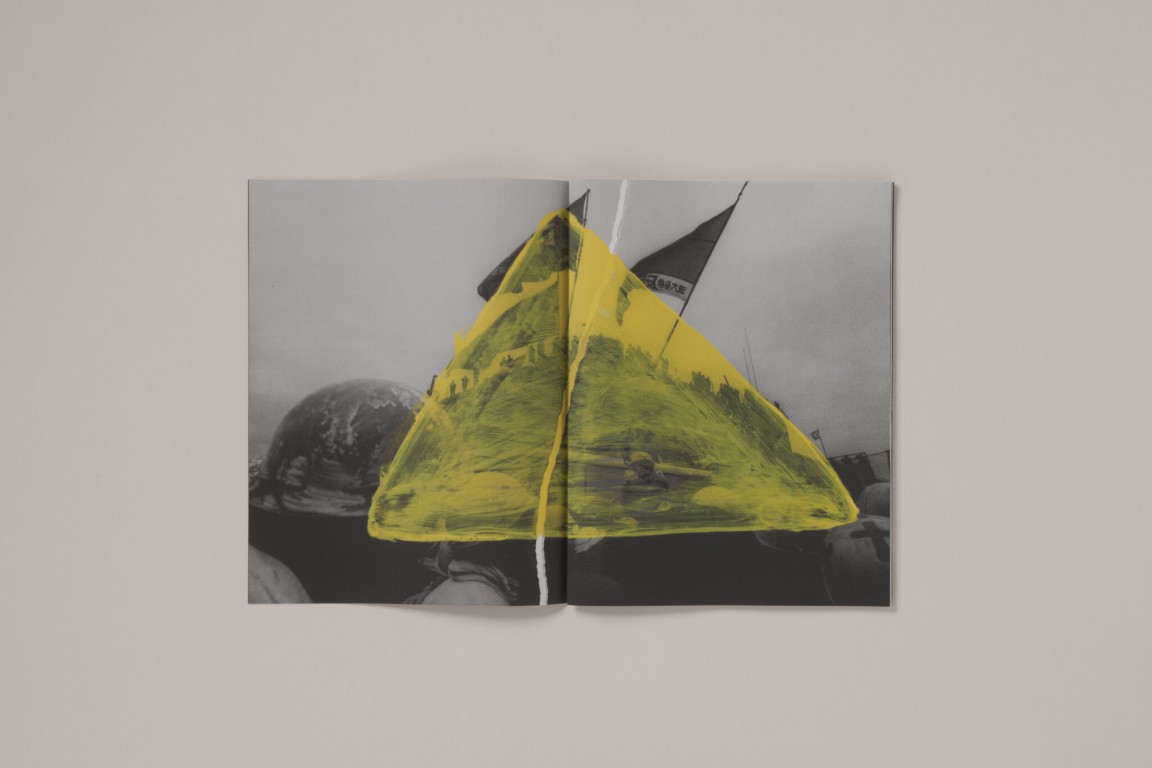
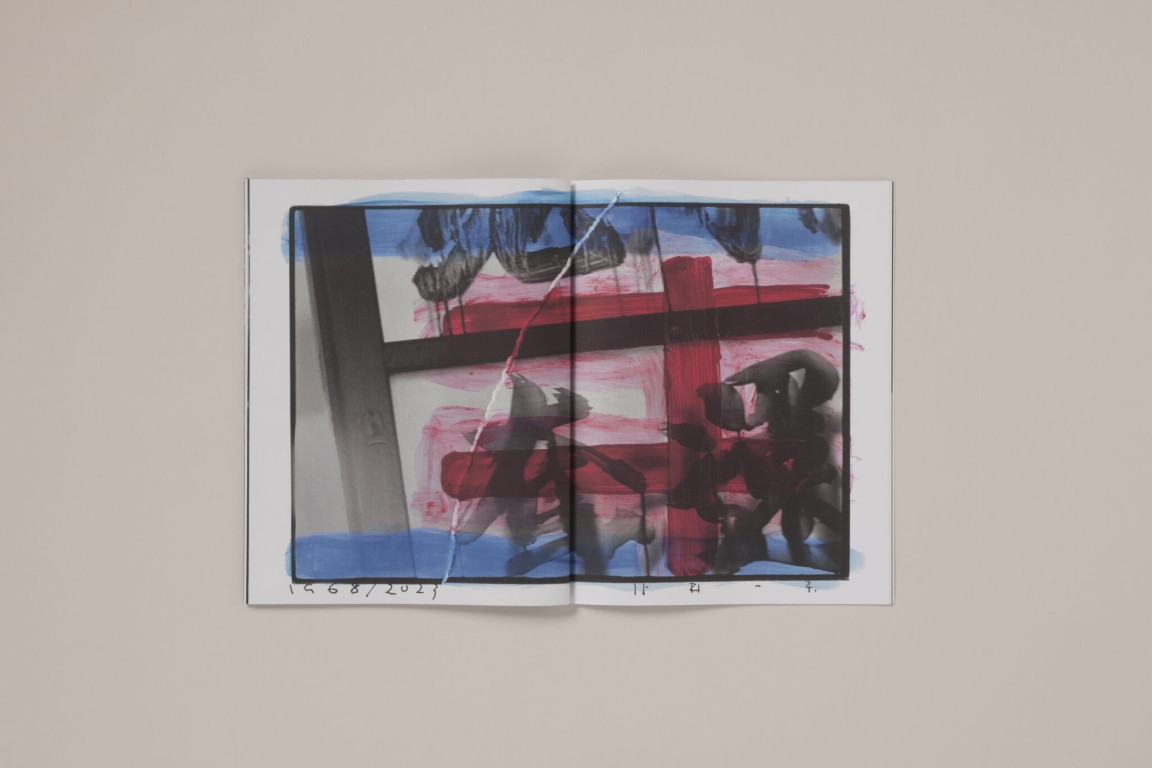
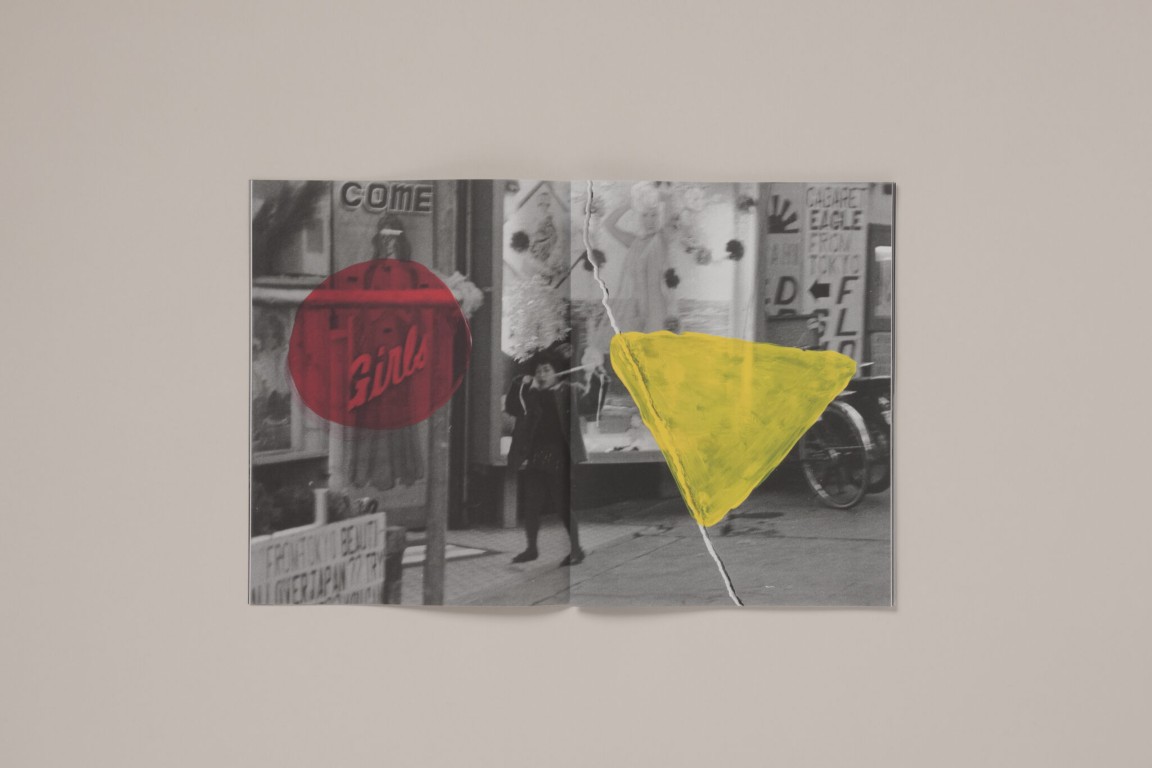
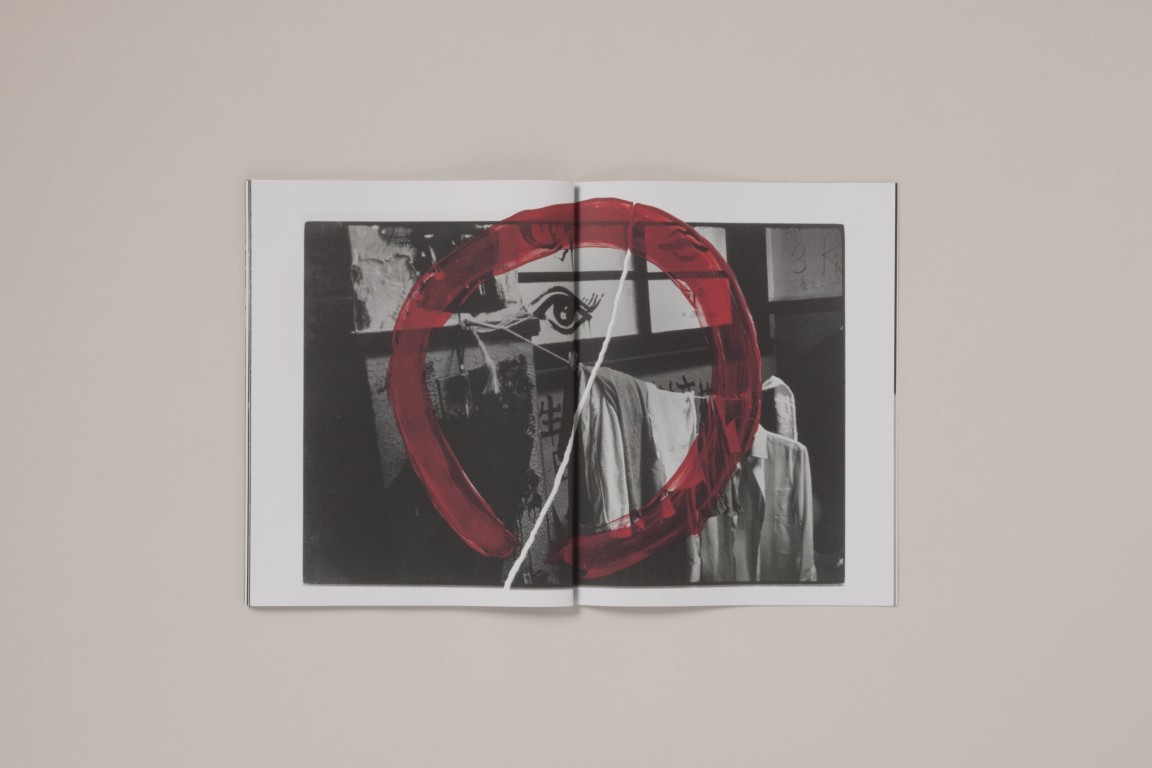
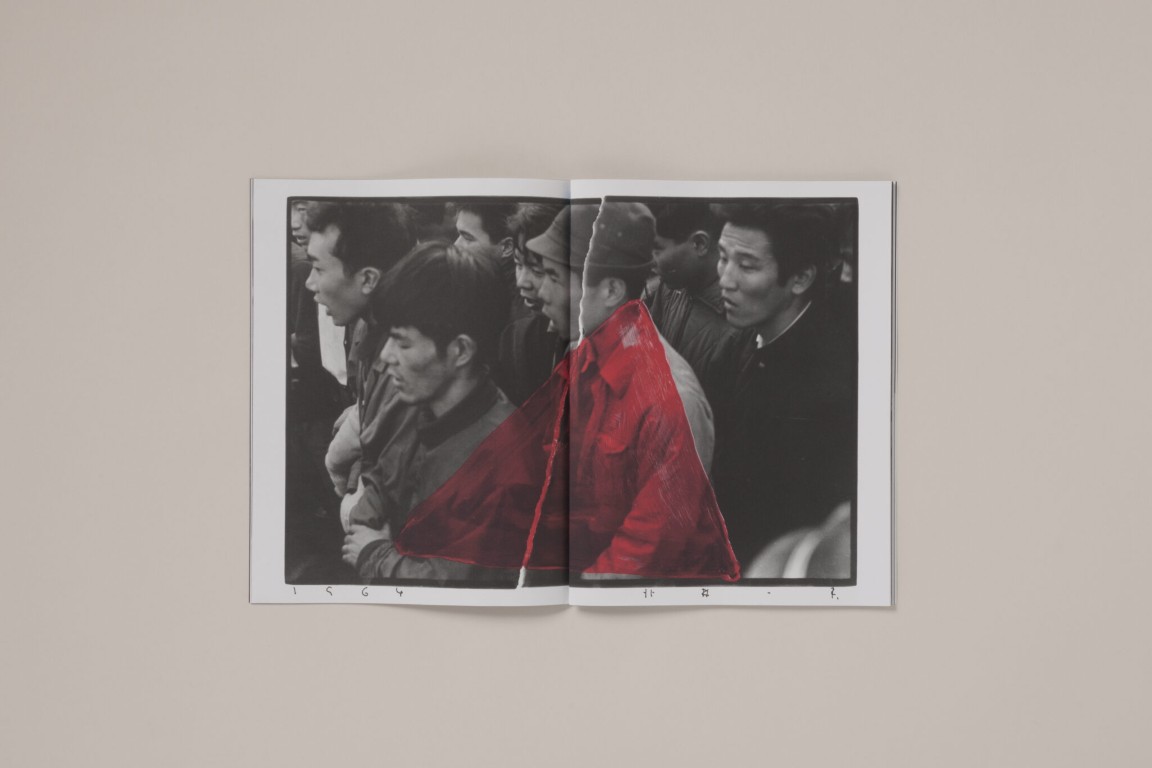
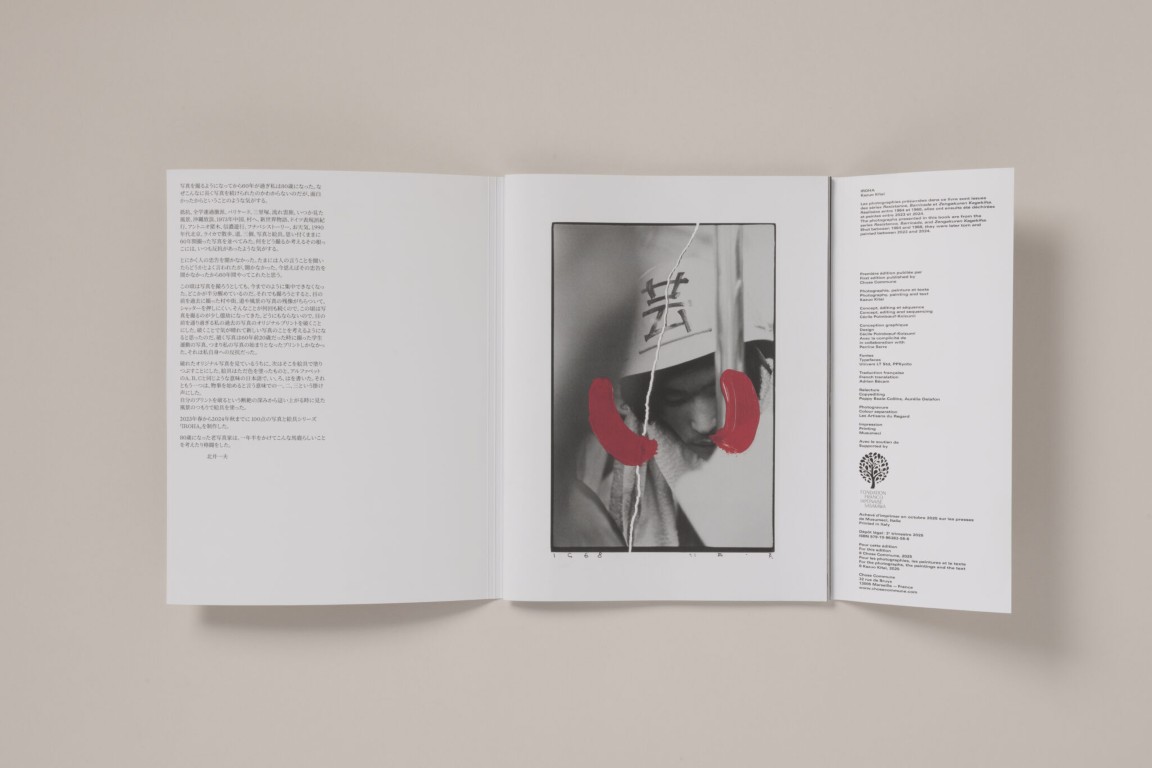
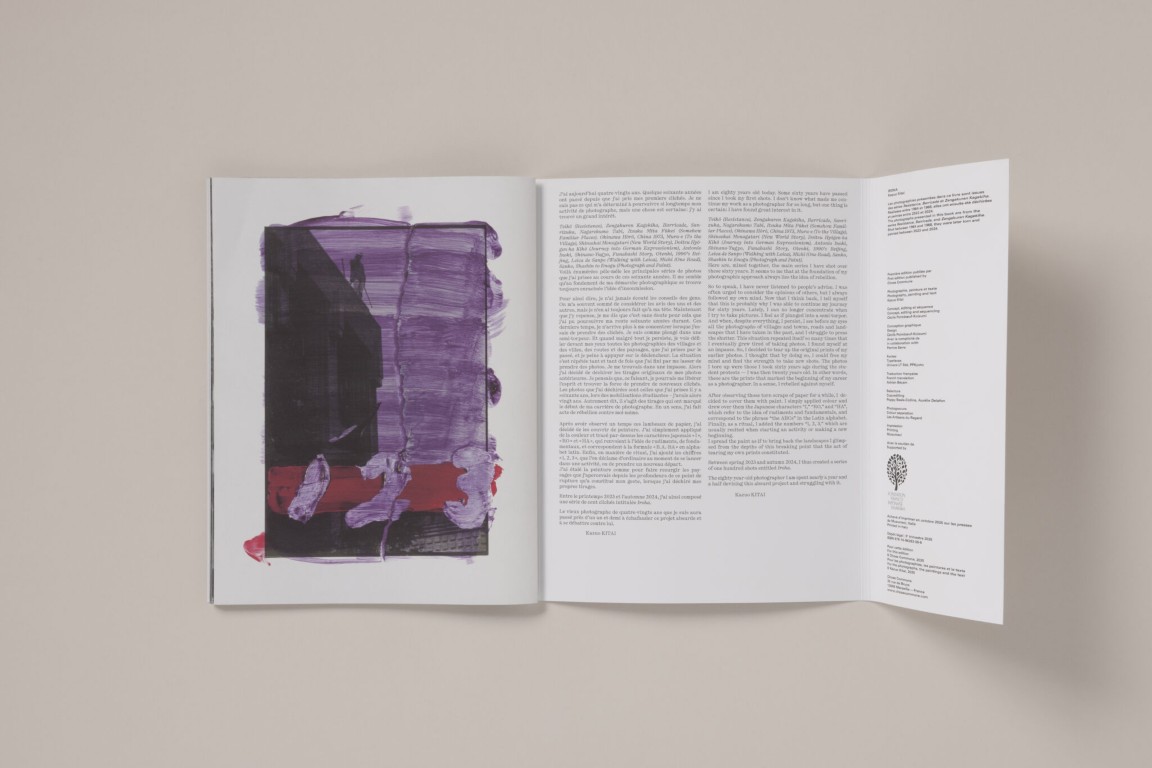
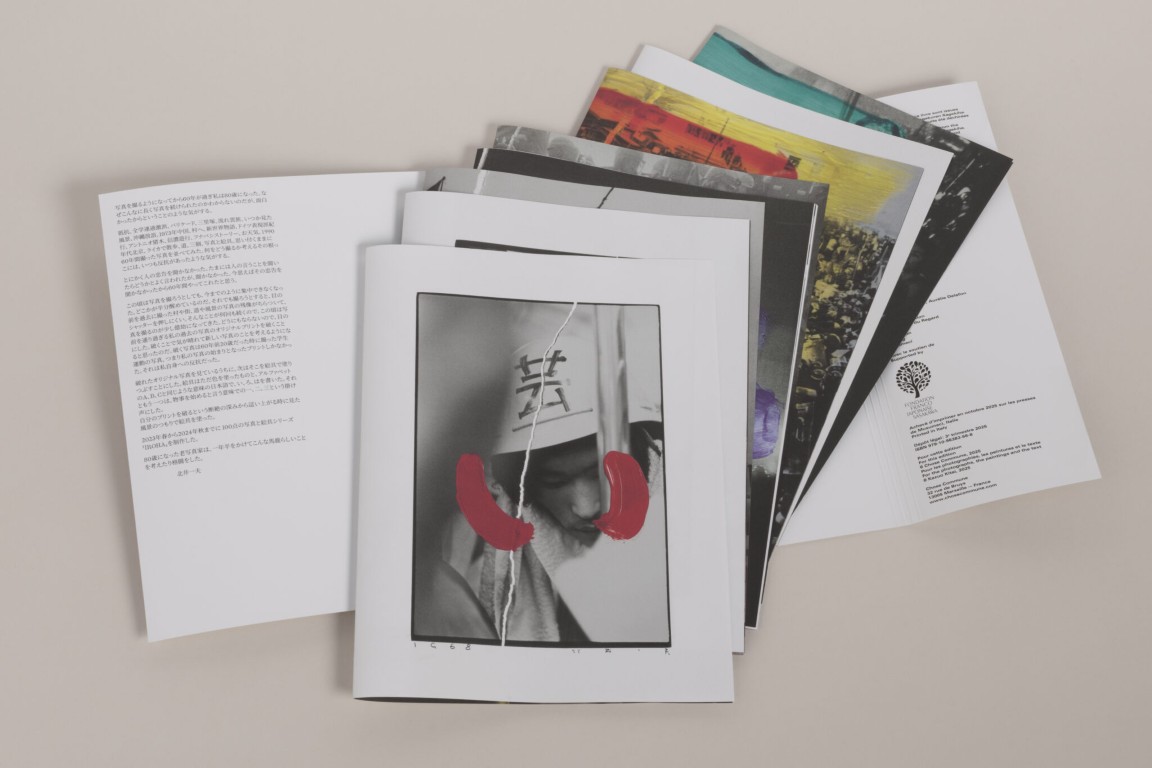
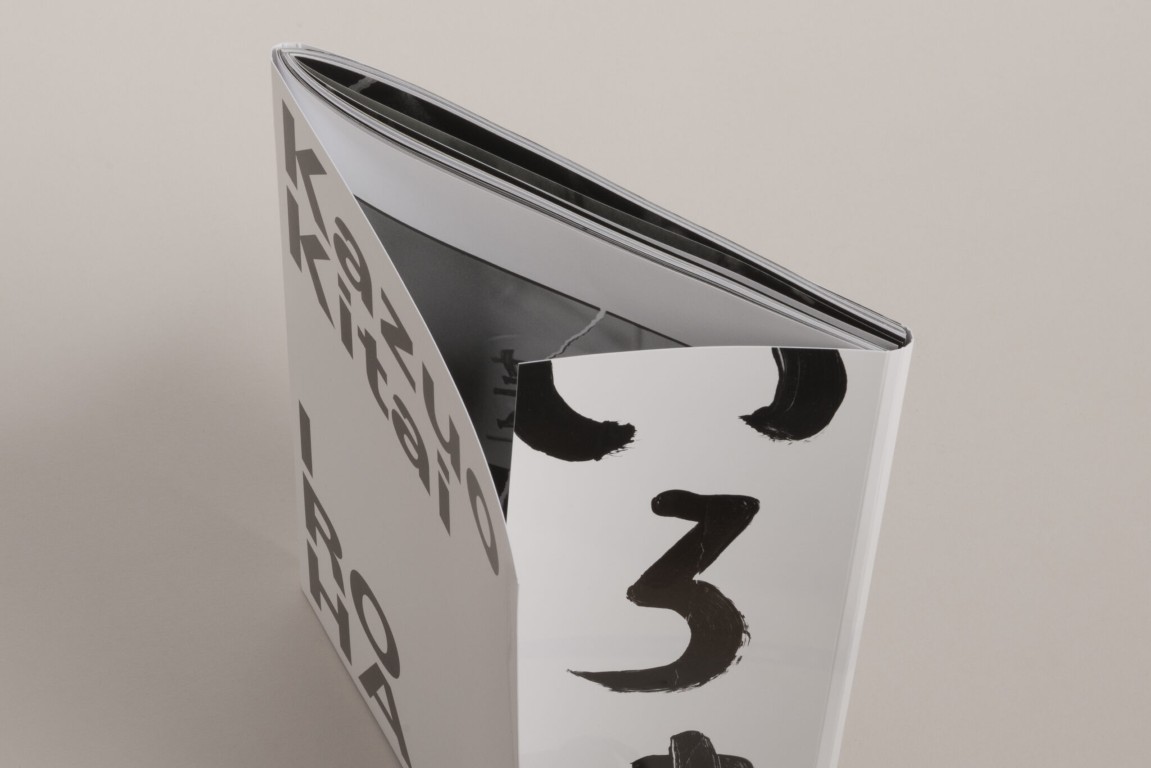
En déchirant ses tirages argentiques et en les recouvrant de peinture, Kitai transforme la photographie en matière première. Le documentaire devient abstraction ; l’image se fait surface, support d’une forme hybride, à mi-chemin entre calligraphie et peinture. Cette œuvre marque une rupture dans sa pratique : il ne s’agit plus de témoigner, mais de réinterpréter.
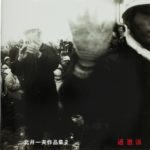
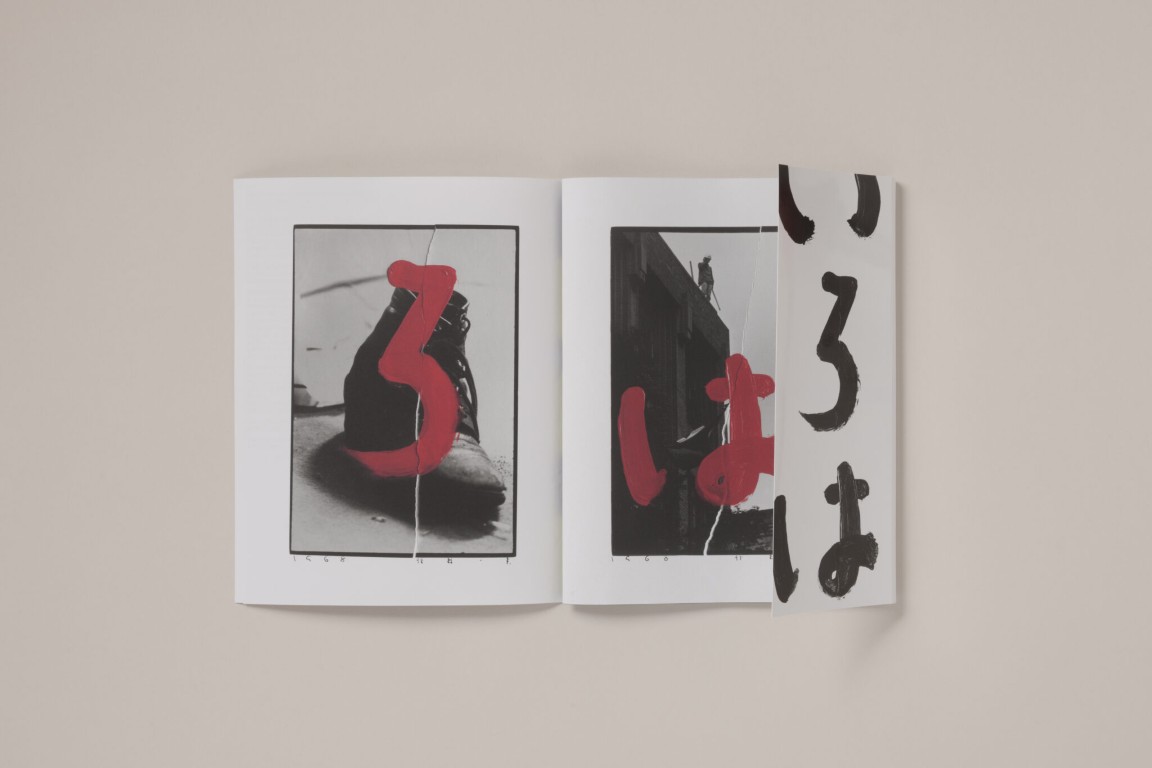
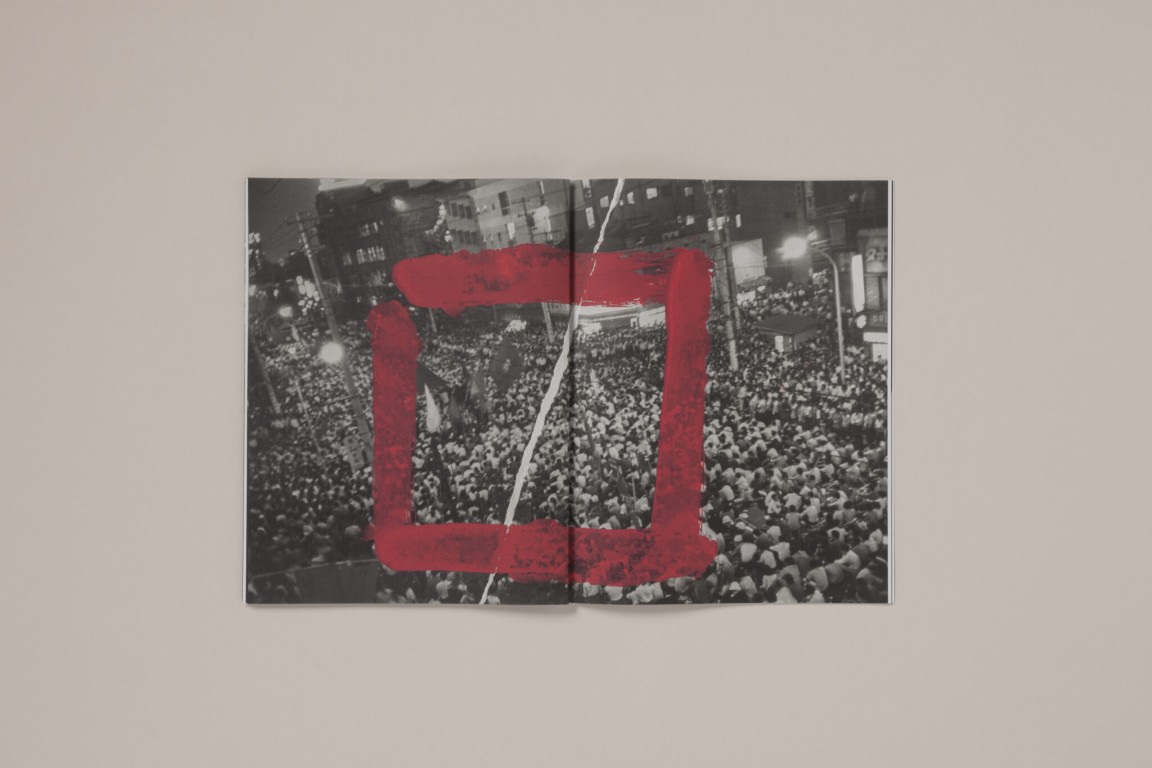
Dans ces photographies en noir et blanc apparaissent des hommes casqués, des ouvriers, des policiers, des étudiants, des rues habitées, des objets en suspension. L’artiste les recouvre de couleurs vives et y inscrit les caractères japonais « I », « RO » et « HA » — les premières syllabes de l’ordre traditionnel des kana, équivalent du « A-B-C » ou du « B.A.-BA » de l’alphabet latin. Un retour aux fondamentaux, encore souligné par les chiffres « 1, 2, 3 », habituellement énoncés comme un compte à rebours avant de mettre quelque chose en mouvement.
In this new series, Kazuo Kitai revisits his own photographic archives: faces, bodies under tension, marching crowds, fragments of resistance. Known for documenting the protest movements in Japan during the 1960s, he now chooses to reactivate these images through a radical gesture.
By tearing his silver prints and covering them with paint, Kitai transforms photography into raw material. The documentary becomes abstraction; the image becomes a surface for a hybrid form, somewhere between calligraphy and painting. This work marks a break in his practice: it is no longer about bearing witness, but about reinterpretation.
In these black-and-white photographs, we see helmeted men, workers, police officers, students, inhabited streets, and suspended objects. The artist overlays them with vivid colors and inscribes the Japanese characters “I,” “RO,” and “HA” — the first syllables of the traditional kana order, the equivalent of the “A-B-C” or “B.A.-BA” in Latin script. A return to fundamentals, further emphasized by the numbers “1, 2, 3,” typically recited as a countdown before setting something in motion.
A manifesto in book form — at the intersection of memory, painterly gesture, and renewal.