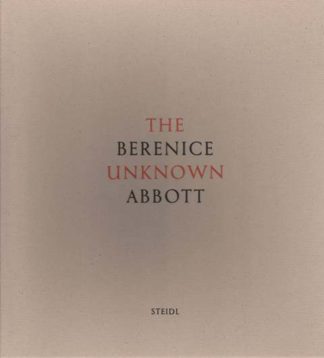
Le marché du livre d’occasion ; photos en couleurs.

| Poids | 1350 g |
|---|---|
| Dimensions | 23 × 27 cm |
| Spécifité | |
| EAN | 9783865212733 |
| Photographe | |
| Ville | |
| Editeur | |
| Date d'édition | |
| ISBN | 9783865212733 |
| Langue(s) | anglais |
| Nombre de pages | 174 |
| Reliure | Relié |
Plus de livre de cet éditeur
-

Mat Hennek : Sounds of Spheres
Dans les photographies atmosphériques de Sounds of Spheres, Mat Hennek crée des impressions frappantes sur la façon dont nous nous engageons avec imagination avec la nature.
In the atmospheric photographs of Sounds of Spheres, Mat Hennek creates striking impressions of how we imaginatively engage with nature.
-
-

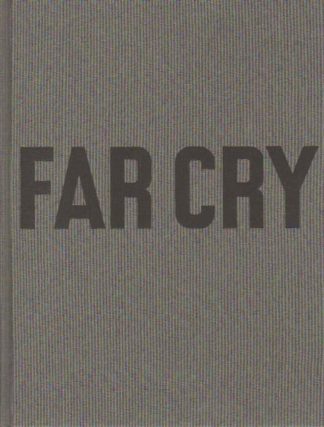
Paulo Nozolino : Far cry
Exemplaire Signé / Signed Copy.
Livre Épuisé / Out of Print Book.
Exemplaire Neuf / Copy New.
Catalogue de l’exposition organisée au Museu de Arte Contemporânea de Serralves à Porto du 7 mai au 10 juillet 2005 présentant l’univers mystérieux et sombre du photographe portugais.
-

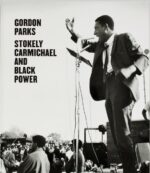
Gordon Parks : Stokely Carmichael and Black Power
Dans son portrait détaillé d’un leader et d’un mouvement, Gordon Parks révèle son propre plaidoyer pour le pouvoir noir et son message d’autodétermination et d’amour.
In his finely draw n sketch of a leader and a movement, Parks reveals his own advocacy of Black Power and its message of self-determination and love.
-

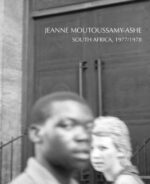
Jeanne Moutoussamy-Ashe : South Africa, 1977/1978
45,00€Cette publication, lauréate du prix du livre Gordon Parks Foundation/Steidl 2024, présente plus de 100 photographies de Moutoussamy-Ashe, dont beaucoup n’ont jamais été publiées auparavant.
This publication, winner of the 2024 Gordon Parks Foundation/Steidl Book Prize, features more than 100 of Moutoussamy-Ashe’s photographs, many never published before.
Superbes photographies documentant les gens, les lieux et les mouvements activistes de l’ère de l’apartheid en Afrique du Sud La compréhension de la race et de la classe par la photographe américaine Jeanne Moutoussamy-Ashe a été façonnée par les pratiques discriminatoires systémiques de Chicago; comme elle le reflétait plus tard, « à sa manière, une forme d’apartheid. » Après avoir rencontré les photographies d’Ernest Cole et sa formation auprès de mentors tels que Gordon Parks et Garry Winogrand au début des années 1970, Moutoussamy-Ashe (née en 1951) se rend en Afrique du Sud au plus fort de l’apartheid, armée de son appareil photo. En mars 1977, elle y accompagne son mari Arthur Ashe dans le cadre d’une équipe de tournage d’un documentaire télévisé sur les sports et l’apartheid. Revenant seule l’année suivante, elle a visité le Cap, Durban, Johannesburg et KwaZulu-Natal, ainsi que les cantons d’Alexandra, de Kliptown, de Lenasia et de Soweto, en découvrant le pays et ses habitants à travers son objectif, avoir un accès privilégié à divers événements et documenter des rencontres avec des personnalités influentes. En noir et blanc et en couleurs vives, les images de Moutoussamy-Ashe offrent un point de vue distinct d’un photographe afro-américain sur une période turbulente dans l’histoire sud-africaine.
Superb photographs documenting the people, places and activist movements in apartheid-era South Africa American photographer Jeanne Moutoussamy-Ashe’s understanding of race and class was shaped by Chicago’s systemic discriminatory practices; as she later reflected, the city had, « in its own way, a form of apartheid. » After encountering Ernest Cole’s photographs and training with mentors such as Gordon Parks and Garry Winogrand in the early 1970s, Moutoussamy-Ashe (born 1951) traveled to South Africa at the height of apartheid, armed with her camera. In March 1977 she accompanied her husband Arthur Ashe there, as part of a team filming a TV documentary on sports and apartheid. Returning alone the next year, she visited Cape Town, Durban, Johannesburg and KwaZulu-Natal, and the townships of Alexandra, Kliptown, Lenasia and Soweto, getting to know the country and its people through her lens, gaining special access to various events and documenting encounters with influential figures. In stark black-and-white and vivid color, Moutoussamy-Ashe’s images offer a distinct perspective from an African American photographer on a turbulent period in South African history.