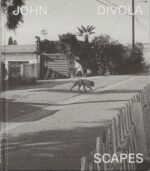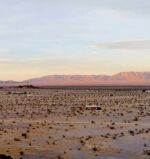
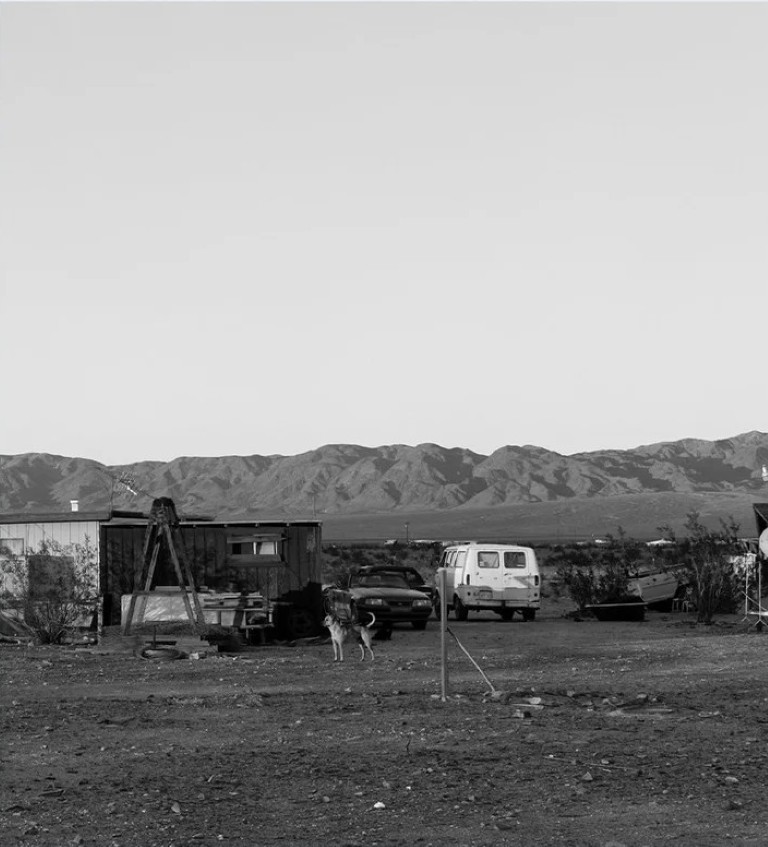
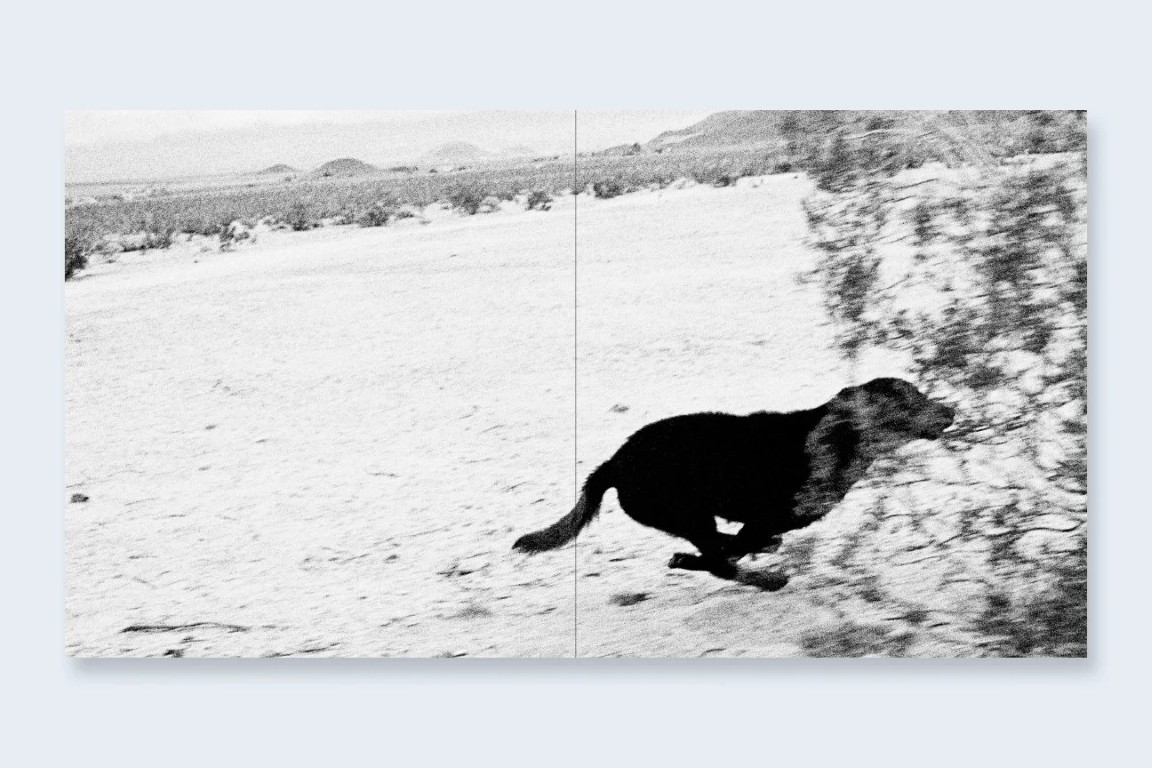
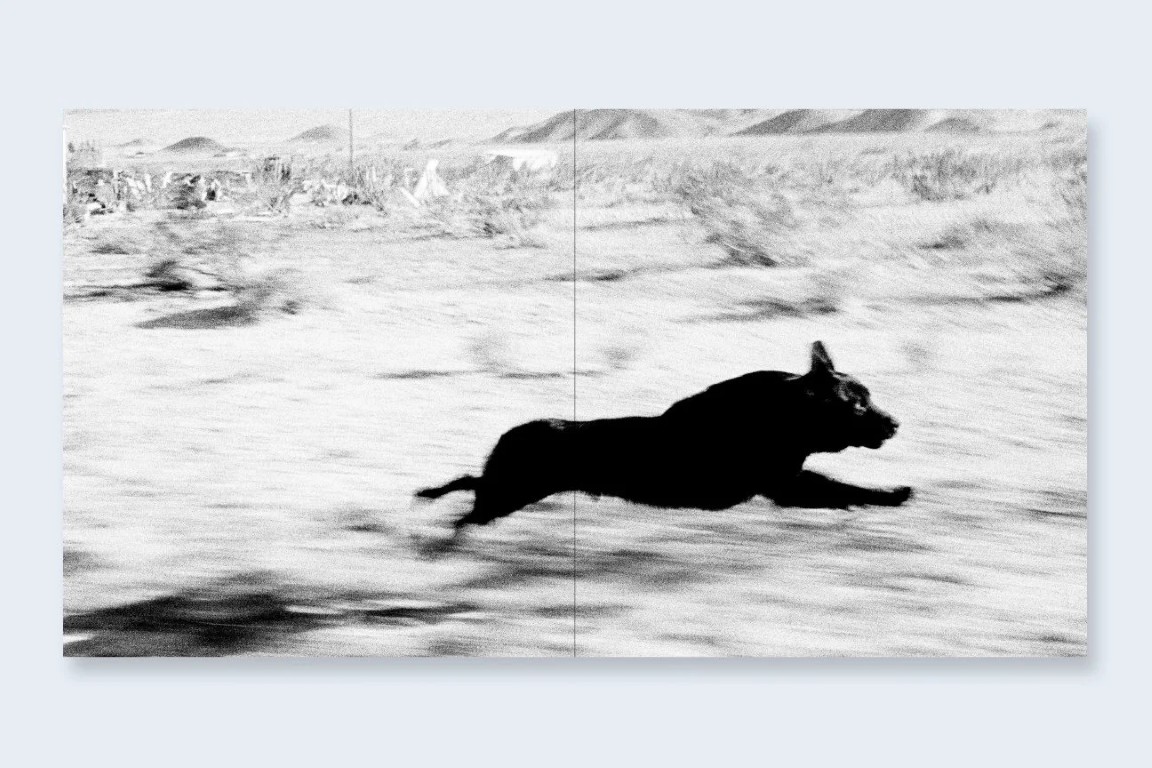
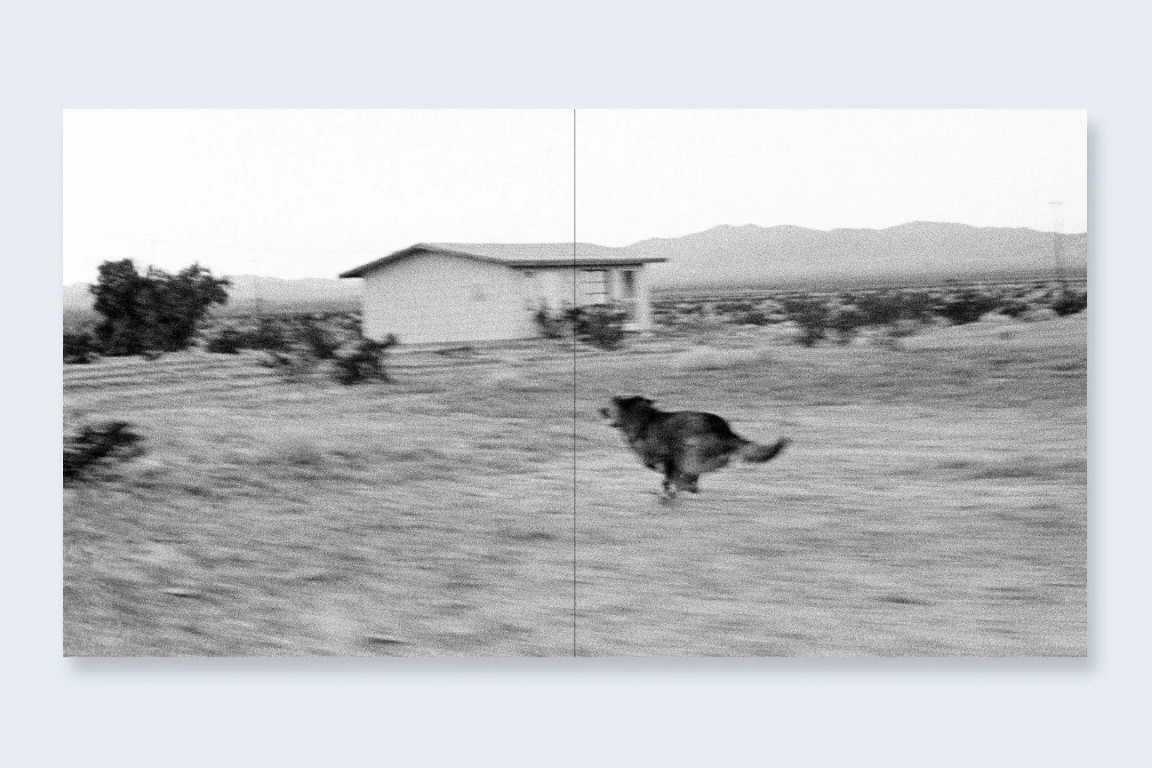
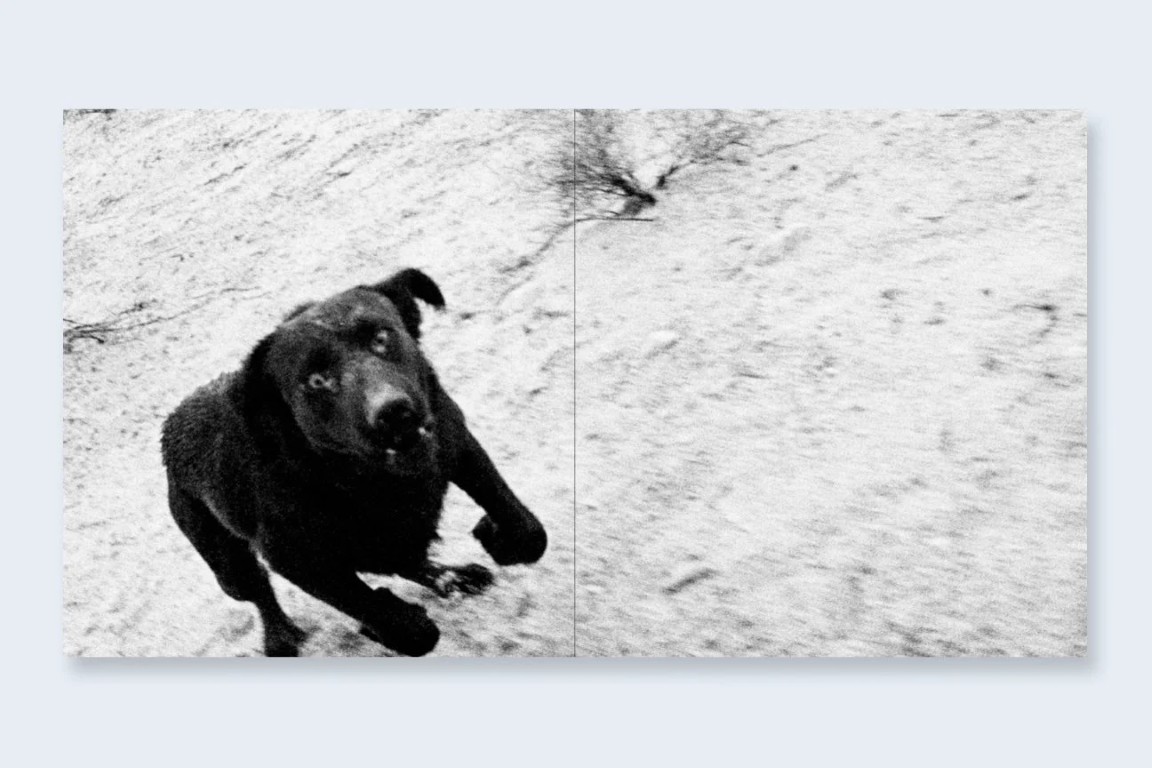
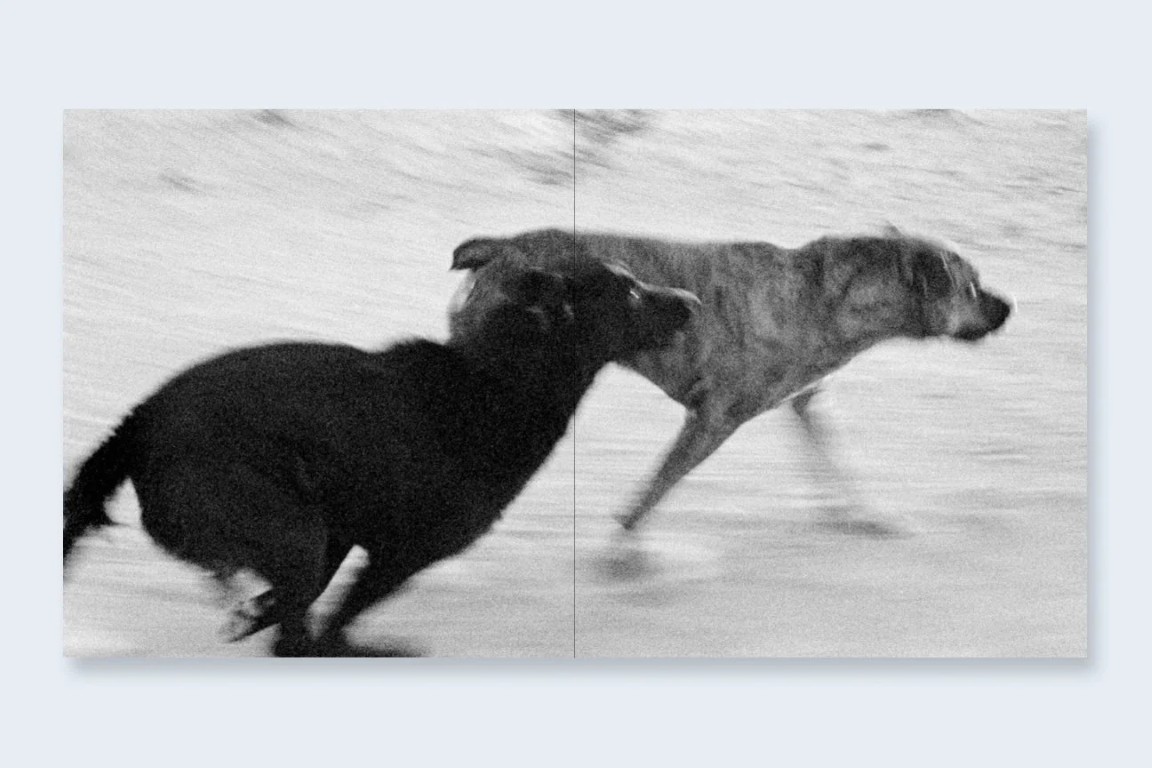
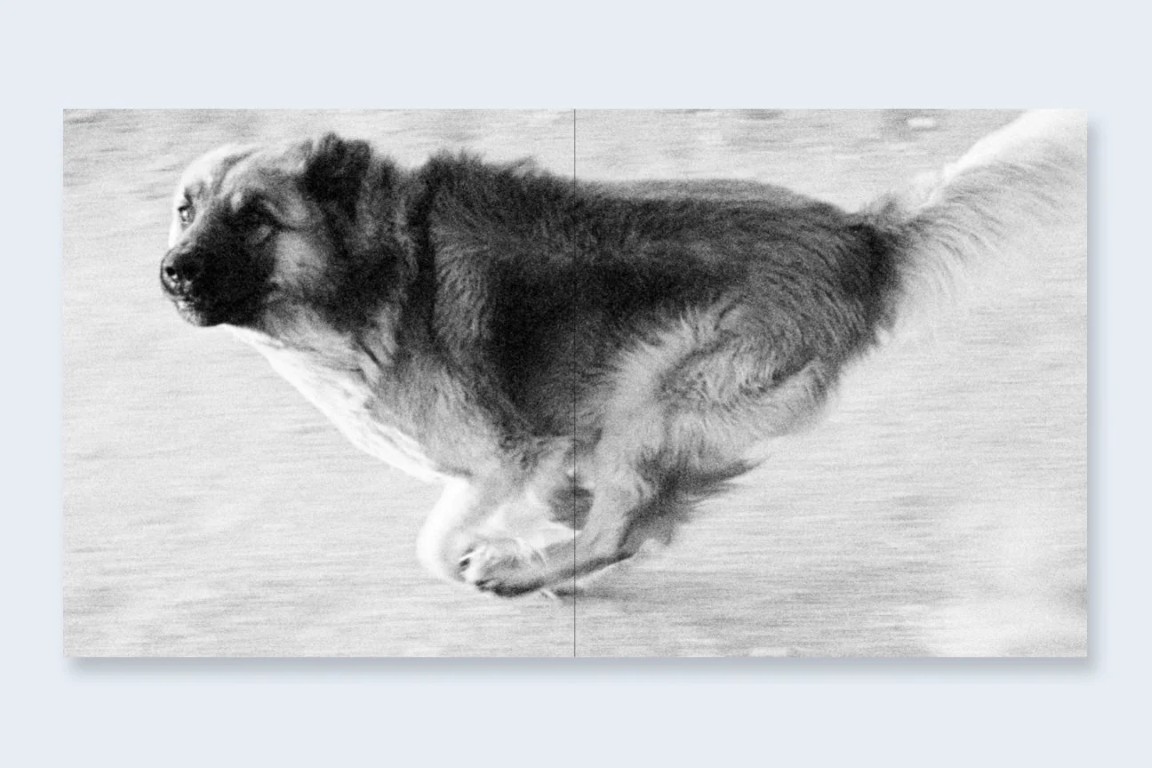
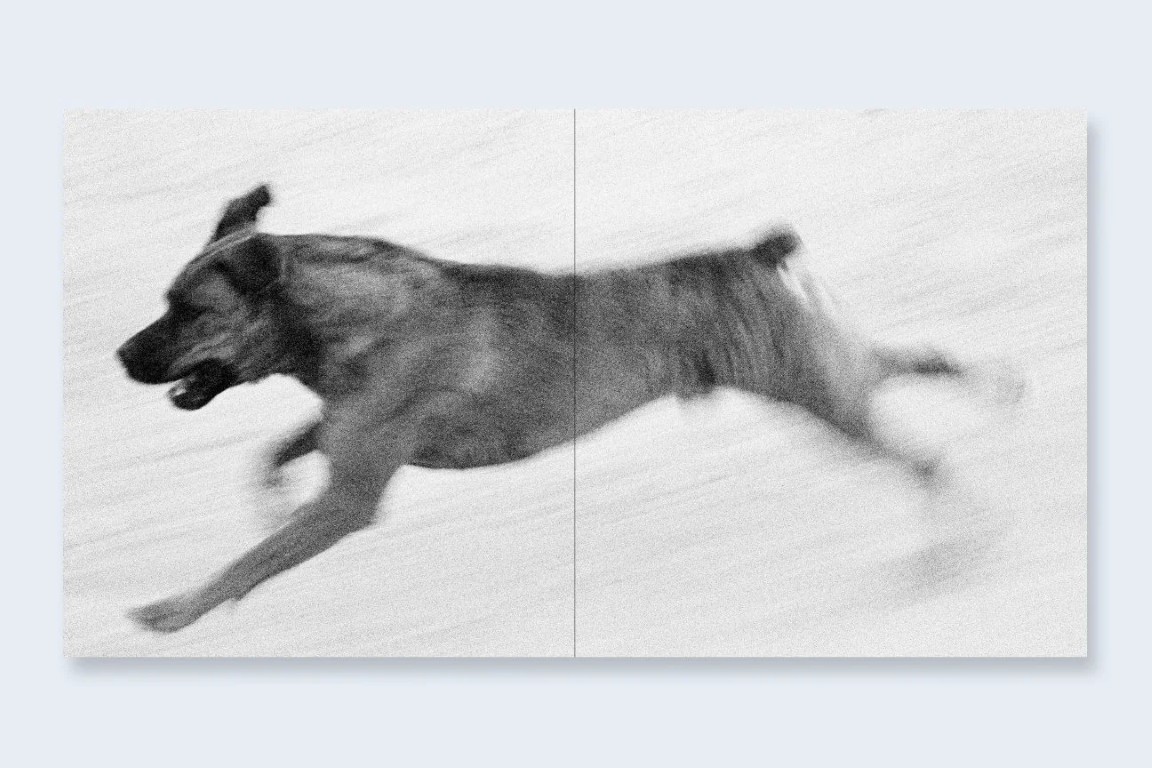
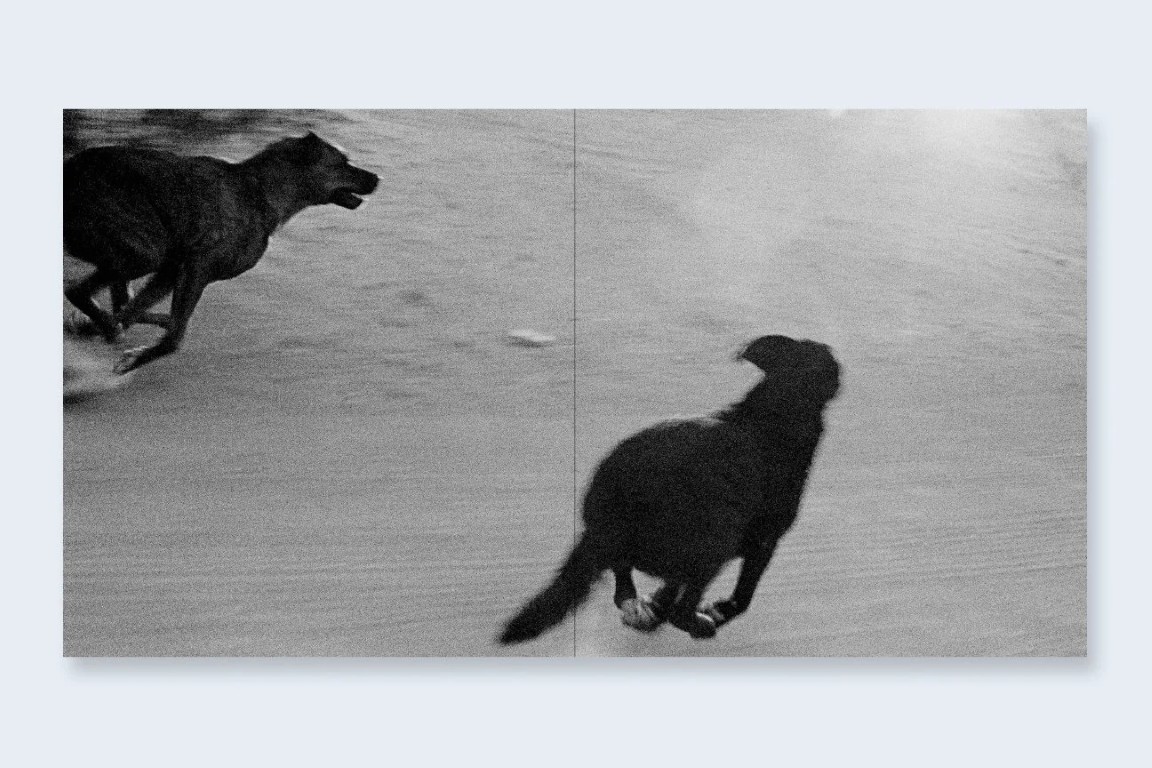
« De 1995 à 1998, j’ai travaillé sur une série de photographies de maisons isolées dans le désert, à l’extrémité est de la Morongo Valley, en Californie du Sud. En errant dans le désert, il arrivait parfois qu’un chien se mette à poursuivre ma voiture. Vers 1996, j’ai commencé à emporter avec moi un appareil 35 mm équipé d’un moteur d’entraînement et chargé d’une pellicule noir et blanc rapide et granuleuse. Le procédé était simple : lorsque je voyais un chien courir vers la voiture, je faisais la mise au point à l’avance et réglais l’exposition. D’une main sur le volant, je sortais l’appareil par la fenêtre et déclenchais, exposant de quelques images à une pellicule entière. J’avoue que je n’hésitais pas à faire demi-tour pour repasser devant une maison où un chien particulièrement enthousiaste s’était manifesté.
Réfléchir à l’image d’un chien poursuivant une voiture invite à d’innombrables métaphores et juxtapositions : culture et nature, domestique et sauvage, amour et haine, joie et peur, héroïsme et idiotie. On peut y voir une danse viscérale et cinétique. Il y a là deux vecteurs et deux vitesses : celle du chien et celle de la voiture. Et sachant qu’un appareil photo ne capturera jamais la réalité, et qu’un chien n’attrapera jamais une voiture, c’est la preuve d’une dévotion à une entreprise sans espoir. » — John Divola
“From 1995 to 1998, I worked on a series of photographs of isolated houses in the desert at the east-end of the Morongo Valley in Southern California. As I meandered through the desert, a dog would occasionally chase my car. Sometime in 1996 I began to bring along a 35mm camera equipped with a motor drive and loaded with a fast and grainy black-and-white film. The process was simple; when I saw a dog coming toward the car I would pre-focus the camera and set the exposure. With one hand on the steering wheel, I would hold the camera out the window and expose anywhere from a few frames to a complete roll of film. I’ll admit that I was not above turning around and taking a second pass in front of a house with an enthusiastic dog.
Contemplating a dog chasing a car invites any number of metaphors and juxtapositions: culture and nature, the domestic and the wild, love and hate, joy and fear, the heroic and the idiotic. It could be viewed as a visceral and kinetic dance. Here we have two vectors and velocities, that of a dog and that of a car and, seeing that a camera will never capture reality and that a dog will never catch a car, evidence of devotion to a hopeless enterprise.” – John Divola