
Livre Épuisé. Exemplaire avec usures d’usage.
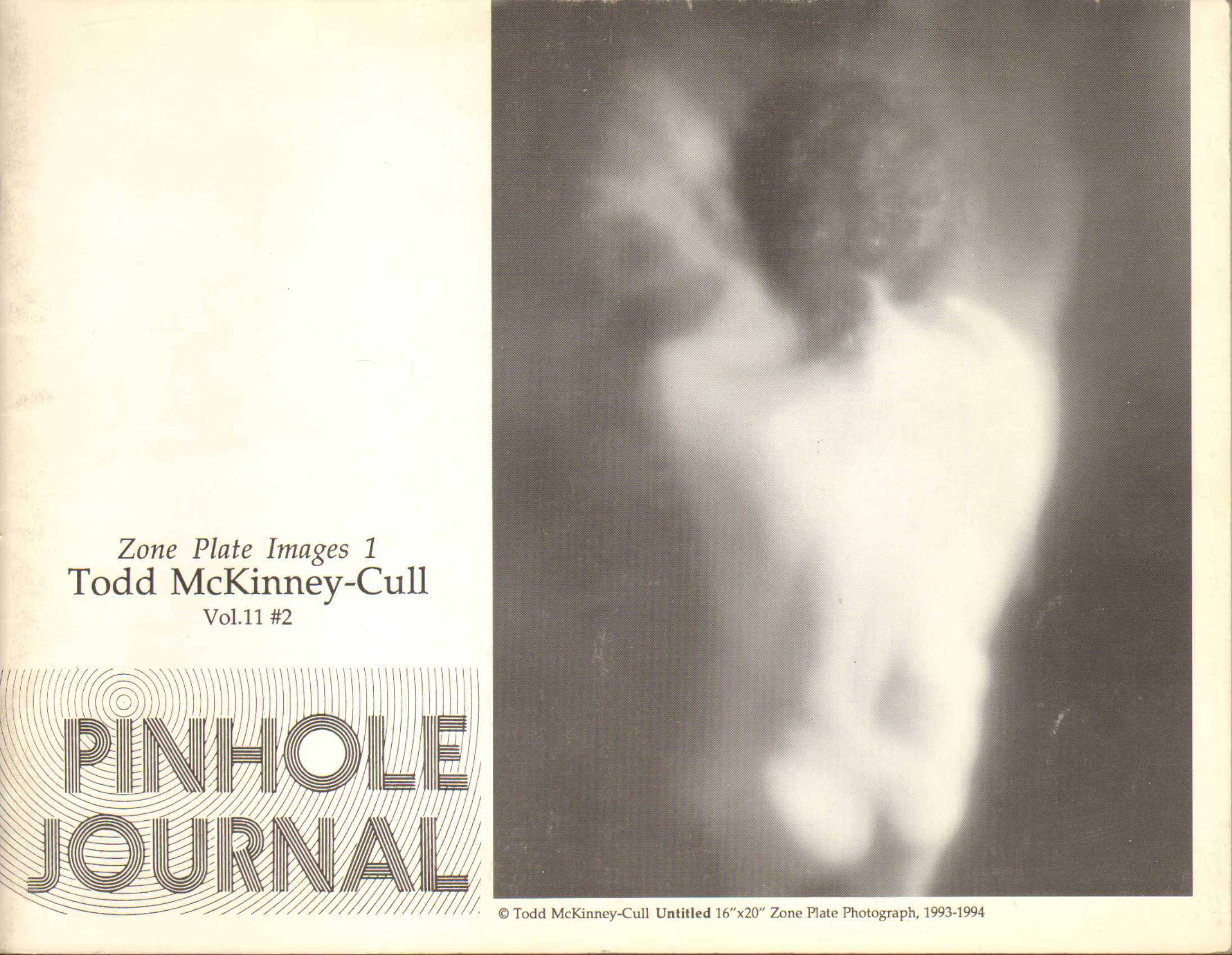
« Le principe de base de la plaque de zone est simple mais fascinant. La lumière se déplace en ligne droite ; c’est la raison pour laquelle les trous d’épingle fonctionnent comme ils le font. Cependant, la lumière se courbe également lorsqu’elle passe au-delà d’un bord. C’est ce qu’on appelle la diffraction. En termes simples, lorsque la diffraction d’anneaux concentriques correctement espacés est ajoutée à un sténopé, cela a l’effet cumulatif d’une lentille de focalisation. Et puisque Lighy voyage aussi directement à travers les mêmes anneaux concentriques, il produit des halos autour des sujets lumineux. Cet effet n’est pas sans rappeler celui de la photographie infrarouge courante, dans laquelle la douce « lueur » est causée par la lumière qui rebondit dans l’émulsion du film, une matière entièrement différente. Les deux types de photographie donnent un aspect rêveur similaire, d’un autre monde, cependant.
La plaque de zone ‘lentille’ que Todd a utilisée était celle que j’ai faite à partir d’une impression informatique photographiée sur du film Lith. Elle avait une longueur focale de 75 mm. Il a été monté dans un simple obturateur à bascule sur une caméra 4 » » construite par Todd McKinney-Cull » -Sam Wang « Understanding the Zone Plate »
Out of Print Book. Copy with usual wear.
« The basic principle for the zone plate is simple but fascinating. Light travels in a straight line ; that is the reason pinholes work as they do. However, light also bends when it travels past an edge. This is called diffraction. In simple terms, when the diffraction of properly spaced concentric rings is added to a pinhole, it has the cumulative effect of a focusing lens. And since lighy also travels straight through the same concentric rings, it yields halos around bright subjects. This effect is not unlike that of common infrared photography, in which the soft ‘glow’ is caused by light bouncing around in the film emulsion, an entirely different matter. Both kinds of photography give a similar dreamy, other worldly look, however.
The zone plate ‘lens’ that Todd used was one that I made from a computer printout photographed onto Lith film. It had a focal lenght of 75mm. It was mounted in a simple swing-away shutter on a 4 »x5 » camera built by Todd McKinney-Cull » -Sam Wang « Understanding the Zone Plate »